
On this page
For enterprise brands processing over $100M in annual GMV, infrastructure is frequently the most significant bottleneck to sustained growth. A typical legacy stack consists of disconnected systems—a legacy web storefront, a separate mobile wrapper, and a complex patchwork of middleware—that force internal teams to pay a continuous 'fragmentation tax.' This operational drag is most visible when seasonal campaigns or new product launches require manual coordination across disparate codebases. Strategic ecommerce platform migration is no longer a mere technical upgrade; it is a business imperative to reclaim operational agility. By moving to a unified architecture, large-scale retailers can consolidate their operations and ensure their digital storefronts are purpose-built for scale and performance.
The High Cost of Fragmented Legacy Architectures
Many enterprises operate under the assumption that a responsive website wrapped in a WebView is a sufficient mobile strategy. In practice, this fragmented approach creates significant technical debt. When web and mobile experiences are managed through different workflows, development cycles are essentially doubled. Every new feature must be coded, tested, and deployed twice, increasing the surface area for bugs and cross-platform inconsistencies. This siloed management often leads to merchandising bottlenecks where teams must perform duplicate data entry for every promotional update or price change. For a business handling high-volume transactions, these inefficiencies drain the IT budget on maintenance rather than market-leading innovation.
Architectural Consolidation: The Unified Advantage
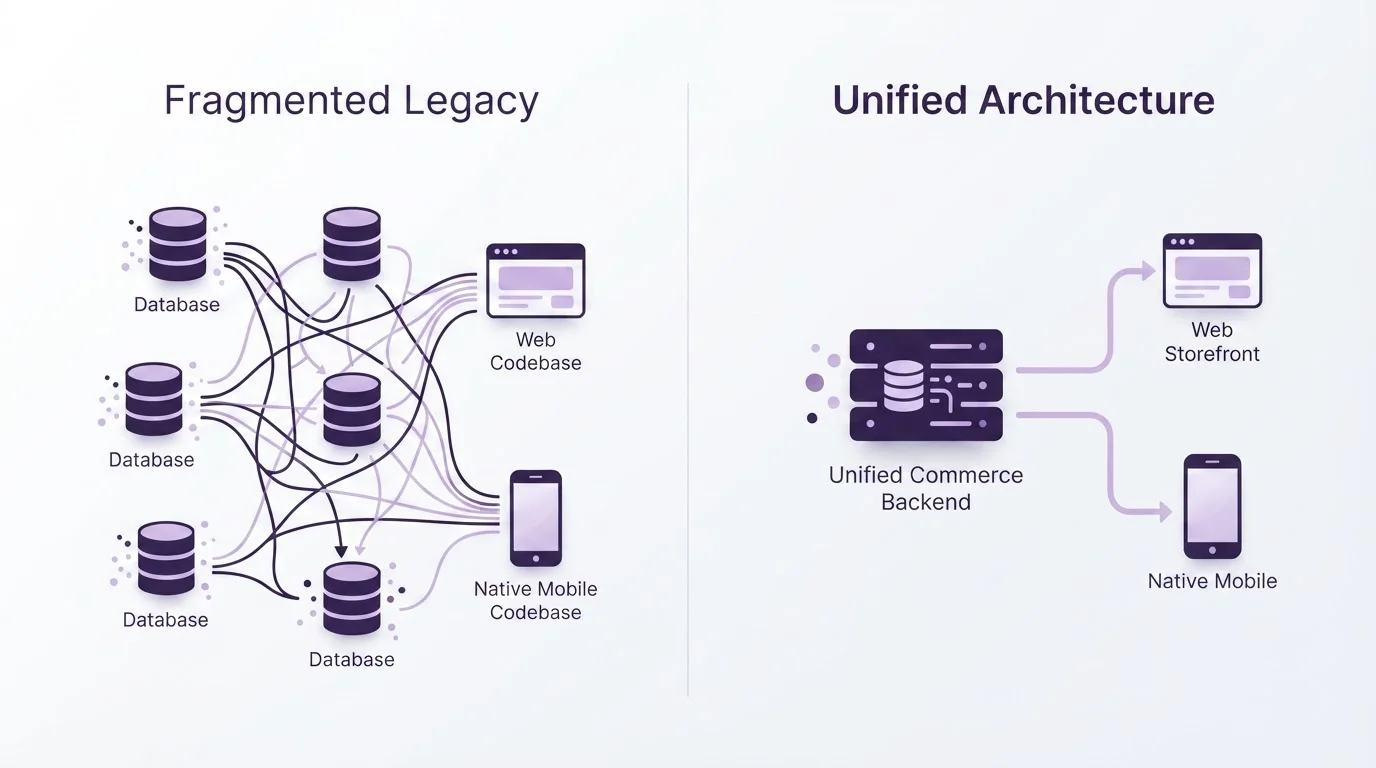
Successful commerce replatforming must center on architectural consolidation to be effective at scale. Supercommerce provides a single backend designed to run both high-performance web storefronts and native mobile commerce simultaneously. This unified approach removes the need for fragile third-party 'glue code' and ensures that every update is reflected instantly across all digital touchpoints. High-volume brands require this level of control to manage complex catalogs and multi-brand setups that often break generic, rigid platforms. By centralizing the management of products, orders, and analytics into a single source of truth, enterprises can redirect their focus toward customer experience and rapid market expansion.
Strategic Integration: Connecting the Enterprise Ecosystem
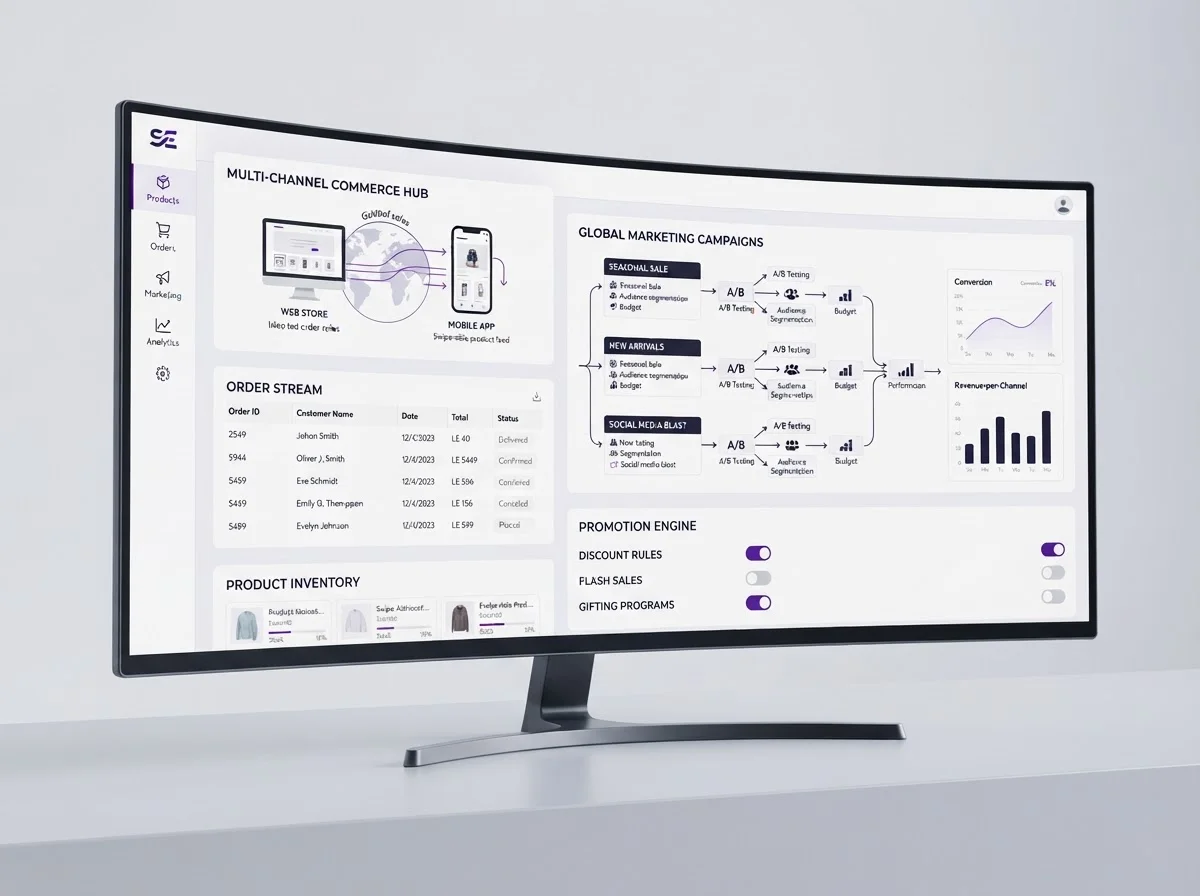
One of the most complex aspects of migration is enterprise system integration. Connecting a new commerce engine to existing ERP, CRM, and PIM systems often involves months of custom development that can delay time-to-market. To mitigate this risk, Supercommerce includes up to 3 integrations in their standard setup, allowing for a more seamless connection to the essential tools that power a large-scale business. This native support reduces the friction of syncing historical customer data and complex inventory logic. Before committing to a full migration, technical leaders can evaluate these capabilities via a demo dashboard to test how team permissions, analytics, and promotional rules function, with no signup required.
Execution Framework for High-Volume Migration
Executing a migration without disrupting active revenue streams requires a disciplined, phased methodology. The first priority is data integrity; historical customer profiles and extensive product catalogs must be mapped with absolute precision to maintain SEO value and customer loyalty. A phased rollout strategy is often the most secure path to success. By launching the core web storefront first to stabilize the transaction engine, brands can then deploy native iOS and Android apps with confidence. This sequence allows for granular performance benchmarking and ensures that the transition remains invisible to the end user, maintaining brand trust during the critical cutover period.
Frequently Asked Questions
Q: How long does a typical enterprise ecommerce platform migration take?
Timelines vary based on catalog complexity and the number of integrations, but a unified approach often reduces the implementation phase compared to managing separate, disconnected web and mobile stacks.
Q: Why should we prioritize native mobile commerce over a responsive site?
Native apps offer superior performance, better hardware integration, and a more seamless user experience that WebViews cannot match, typically resulting in higher conversion rates for high-frequency shoppers.
Q: Can the platform handle multi-brand and multi-region setups?
Yes, the system is built specifically for enterprises with complex catalogs and multi-brand requirements that generic, rigid solutions struggle to support.
Q: How does a unified backend impact the daily workflow of a merchandising team?
It eliminates duplicate data entry. Merchandisers can launch a promotion or update a product once, and it is instantly live on both the web storefront and native mobile apps.
Get practical updates on ecommerce platform migration
Receive new articles and practical insights by email.
Replatforming is a strategic investment in the long-term agility of a brand. By replacing rigid, fragmented systems with a unified solution like Supercommerce, enterprises can eliminate the operational bottlenecks that hinder rapid growth. For brands operating at scale, the path to faster time-to-market begins with a foundation built for deep integration and high performance across every digital channel. Transitioning to a single source of truth ensures that your team spends less time managing infrastructure and more time leading the market.