
On this page
A strategic sap commerce cloud migration to a unified platform represents a fundamental reconfiguration of how enterprise digital revenue is captured and scaled. For CTOs managing complex ecosystems, the drive toward migration is frequently precipitated by the need to dismantle rigid, multi-vendor architectures that have become operational bottlenecks. As market demands shift toward instantaneous performance and native mobile experiences, legacy monoliths often struggle to provide the agility required for rapid feature deployment. This guide provides a technical framework for replacing legacy debt with a high-performance, unified storefront architecture, ensuring your infrastructure is prepared for the next decade of growth.
The 2026 Deadline: The Strategic Imperative for Migration
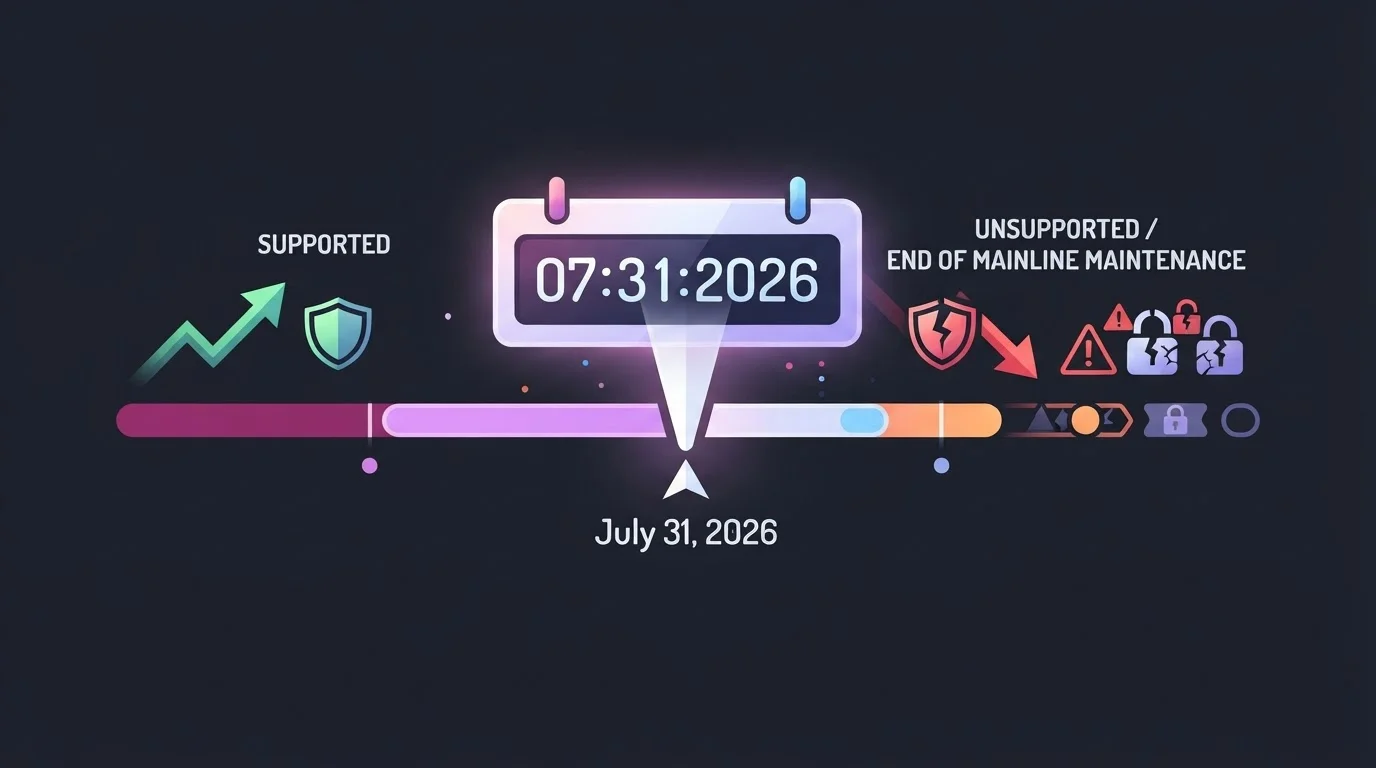
Enterprise commerce platforms serve as the engine for digital growth, yet many organizations are currently tethered to aging foundations. A critical driver for immediate reassessment is the impending end of mainstream maintenance for SAP Commerce version 2205, scheduled for July 31, 2026. This date marks a transition point where maintaining legacy on-premise or older cloud versions becomes a matter of increasing security risk and operational expense. When evaluating an enterprise commerce platform migration, the goal is to shift from a vendor-locked release cycle to an environment where your internal team maintains full control over the roadmap.
Auditing Architectural Overhead in SAP Commerce Cloud
Before moving to Supercommerce, it is essential to audit the technical debt accumulated within your current SAP implementation. SAP Commerce Cloud (formerly Hybris) allows for deep customization, such as creating Business Configuration Maintenance Objects via the ABAP Repository Object Generator. While these features provide technical depth, they often result in a developer-heavy environment where even minor frontend changes require specialized backend resources and extensive testing cycles. In many enterprise environments, the SAP BTP ABAP environment is used to create database tables and generate UI services, forcing engineering teams to focus more on infrastructure maintenance—managing support packages and patches—than on customer-facing innovation.
Unified Architecture: The Supercommerce Advantage
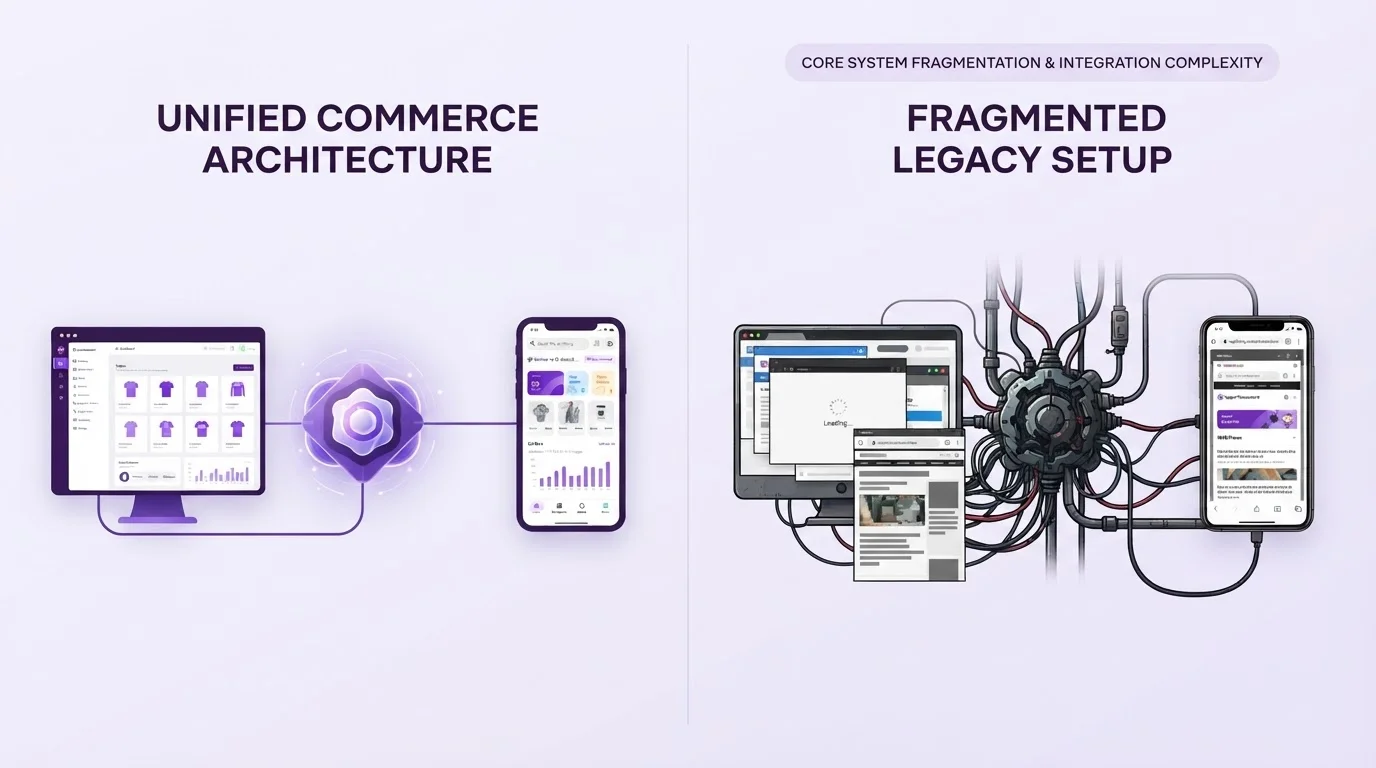
Supercommerce is engineered for enterprises that require a single, unified solution for high-performance web storefronts and native mobile commerce. Unlike legacy platforms that often treat mobile as a secondary concern—typically addressed through responsive websites or WebView wrappers—Supercommerce provides a truly native experience built from the same unified foundation. This ensures that the performance gains realized on the web are mirrored in the mobile app, providing the low-latency experience that modern users demand. By consolidating web and native mobile into a single platform, enterprises eliminate the data silos and content inconsistencies inherent in multi-vendor setups.
A Phased Roadmap for Successful Transition
Migrating at an enterprise scale requires a disciplined, phased approach to ensure business continuity. The process should not be viewed as a simple 'lift and shift' of existing code, but as a strategic re-implementation of business logic on a more efficient foundation. The success of this transition relies on identifying every customization within your SAP BTP cockpit or ABAP projects to distinguish between essential business logic and workarounds created to circumvent legacy platform limitations.
Phase 1: Technical Audit and Discovery
Begin by cataloging all existing integrations and custom objects. This discovery phase defines the 'golden path' for your new architecture, prioritizing features that directly impact revenue and customer experience. It is vital to audit existing SAP services, such as destinations created in the SAP BTP cockpit for Northwind OData services, to determine how they will be modernized in the new environment.
Phase 2: Data Assessment and Infrastructure Setup
Infrastructure setup is a critical prerequisite for successful data migration. This phase involves mapping your existing product, customer, and order data to the Supercommerce schema. Early data profiling is essential to identify where migration is technically feasible and to resolve legacy data debt. This ensures that master data ownership records are clean and that validation bottlenecks are removed before the actual transfer begins.
Strategic Insights for Enterprise Commerce
Receive in-depth perspectives on unified platforms, scalability, and complex integrations for large-scale commerce operations.
Phase 3: Integration and API Strategy
Modern enterprise commerce relies on seamless connectivity with the broader ecosystem, including SAP S/4HANA, CRMs, and PIMs. Supercommerce utilizes an API-first approach, moving away from 'black box' integrations toward real-time data flows. This allows for more responsive inventory updates and complex order routing that legacy systems often struggle to handle without slow batch processing or custom OData services.
Phase 4: Logic Implementation and Cutover
Instead of porting legacy ABAP code, re-implement your core business rules using the native capabilities of the new platform to improve long-term maintainability. Once the logic is in place, execute a rigorous testing cycle that includes functional, performance, and security testing. The final step is a zero-downtime cutover plan that ensures a seamless transition for your customers during the platform switch.
Technical Deep Dive: Data Integrity and ETL
The technical success of any migration hinges on the Extraction, Transformation, and Loading (ETL) process. Moving millions of SKUs and years of order history requires a robust strategy that identifies data parameters at the earliest possible stage. Modernizing connections involves replacing fragile custom-coded links with standardized, scalable API endpoints. This modernization simplifies the troubleshooting process, as developers no longer need to navigate the complexities of the ABAP repository to resolve integration errors or manage security incident reports regarding affected product versions and patches.
Measuring ROI After the Cutover
Post-migration, the focus shifts to realizing the tangible business benefits of the new platform. CTOs should monitor architectural agility by measuring the time required to deploy new features or regional storefronts. Operational efficiency can be tracked through the reduction in specialized maintenance hours; by unifying web and native mobile, you reduce the headcount and overhead required to manage two separate codebases. Monitoring performance metrics like page load times and mobile app responsiveness will further validate the transition's success.
Frequently Asked Questions
Q: What is the primary risk during a migration from SAP Commerce Cloud?
Data quality and infrastructure readiness are common causes of project delays. Early assessment and a clear ETL strategy are essential to mitigate these risks.
Q: How does Supercommerce handle the end of SAP mainstream maintenance in 2026?
Supercommerce provides a modern alternative that allows enterprises to migrate off SAP version 2205 before the July 31, 2026 deadline, avoiding increased support costs and security vulnerabilities.
Q: Can we maintain our existing SAP S/4HANA integration?
Yes. Supercommerce is designed for deep enterprise integration, allowing you to connect your existing ERP, PIM, and CRM systems via a modern API-first architecture.
Q: Is it possible to migrate without impacting live sales?
Yes. By utilizing a phased approach and a strategic cutover plan, enterprises can transition with near-zero downtime, ensuring a seamless experience for existing customers.
Migrating from SAP Commerce Cloud to Supercommerce is a strategic repositioning that addresses the immediate pressure of maintenance deadlines and the long-term need for architectural agility. By moving to a unified, high-performance platform, your organization can eliminate legacy technical debt and deliver the superior commerce experiences your customers expect. With a clear focus on data integrity and integration modernization, the transition to Supercommerce provides the scalable foundation necessary for sustained enterprise growth in an increasingly mobile-first market.