
On this page
Enterprise IT leaders often face a sharp trade-off between architectural control and execution speed. Traditional setups that rely on third-party mobile wrappers and fragmented backends introduce severe maintenance debt. Supercommerce offers a unified alternative designed to consolidate web storefronts and native mobile applications into a single operational system. This architectural shift addresses the core requirements of high-volume digital operations seeking true ecommerce agility.
Core Capabilities for Enterprise Commerce
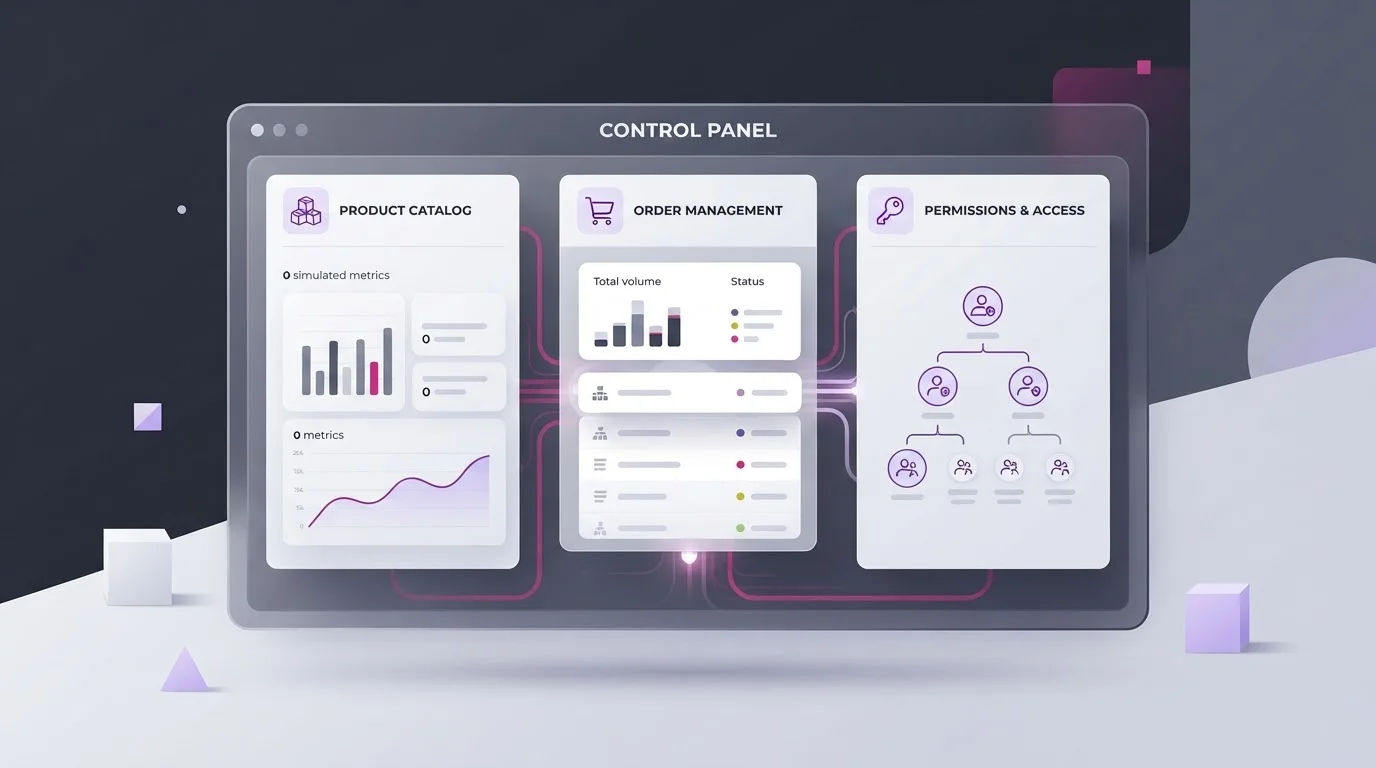
Managing high-volume digital storefronts requires deep visibility without operational friction. A core advantage is that Supercommerce lets users manage products, orders, promotions, analytics, and team permissions — no signup required. This open access allows technical stakeholders to evaluate the management dashboard and mobile experience directly before initiating formal procurement cycles. By unifying these core tools natively, the platform eliminates the security risks, API bottlenecks, and data latencies common to multi-vendor software configurations.
Centralized product management allows engineering teams to deploy updates without waiting for cross-platform replication schedules. The unified console ensures that changes to product availability or pricing tiers propagate globally instantly. This design reduces administrative overhead, allowing business teams to adapt strategies without submitting continuous IT support tickets. Technical leaders gain full operational oversight through a single control plane that covers both web and mobile operations.
Unified Native Mobile Architecture
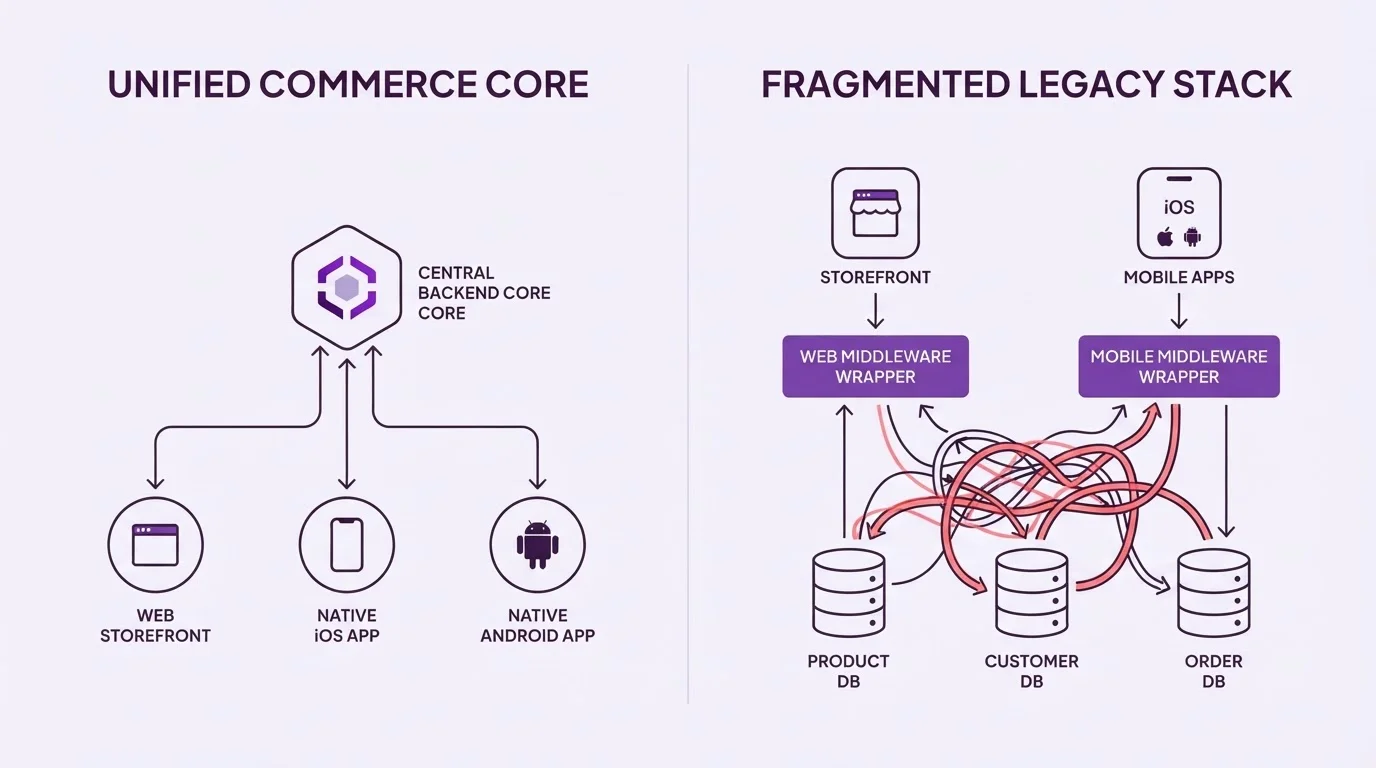
Most legacy platforms treat mobile commerce as a secondary channel, relying on standard web views inside basic application shells. Supercommerce delivers native mobile components built specifically for iOS and Android to maintain optimal performance during peak traffic surges. Because the web and mobile applications share a synchronized backend, data updates reflect instantly across all customer touchpoints. This native-first strategy eliminates inventory lag and ensures consistent promotional logic across channels.
Native mobile commerce components maximize device hardware capability, resulting in smoother transitions and faster page loads. This architecture circumvents the performance degradation often caused by heavy JavaScript execution in responsive mobile browsers. Customers benefit from localized device caching and optimized checkout flows that reduce cart abandonment rates. For organizations aiming to maximize customer lifetime value, providing dedicated mobile applications ensures long-term engagement.
Enterprise Commerce Platform Comparison
When conducting an enterprise commerce platform comparison, system architecture directly determines long-term operational costs. Legacy platforms often require extensive middleware layers to sync web catalogs with standalone mobile applications, driving up technical debt. These disparate data pipelines frequently break during high-volume sales periods, leading to asynchronous stock levels and customer friction. A unified enterprise architecture mitigates these risks by routing all transactions through an integrated core engine.
The table below contrasts a unified commerce architecture with traditional fragmented setups across key enterprise dimensions to highlight the primary operational trade-offs.
| Architectural Dimension | Unified Enterprise Platform | Rigid Legacy Stacks |
|---|---|---|
| Core Management | Centralized control of products, orders, and permissions | Disparate dashboards requiring custom synchronization |
| Mobile Strategy | Performance-optimized native iOS and Android apps | Responsive websites wrapped in basic WebViews |
| Integration Footprint | Streamlined core architecture with built-in pipelines | Excessive reliance on third-party plugin networks |
The Supercommerce Operational Workflow
Operating a large-scale commerce system requires structured data ingestion and clear governance across multiple business units. The workflow begins with a catalog system engineered to support complex SKU hierarchies and custom pricing logic. Automated data pipelines sync product information directly with existing ERP or PIM systems via secure API endpoints. For post-purchase operations, the integrated order management system provides real-time visibility into the fulfillment lifecycle across all active brands.
System configuration also requires a clear understanding of your external software footprint. To maintain high performance and platform stability, Supercommerce includes up to 3 integrations within its standard enterprise configuration. This framework encourages engineering teams to prioritize high-value data exchanges—such as ERP, CRM, and primary logistics pipelines—rather than accumulating loose third-party plugins. Eliminating excessive extensions minimizes security vulnerabilities and streamlines platform updates.
Granular team permissions ensure that marketing, operations, and IT staff operate safely within this streamlined architecture. Administrators can define precise access levels for specific product categories, regions, or promotional campaigns. This isolation prevents unauthorized system changes and maintains compliance with corporate data governance policies. Real-time logging tracks user activity across the dashboard, giving security teams full transparency over administrative actions.
Strategic Insights for Enterprise Commerce
Receive in-depth perspectives on unified platforms, scalability, and complex integrations for large-scale commerce operations.
Determining Product Fit for Your Architecture
Evaluating Supercommerce features and product fit requires a clear assessment of your current operational bottlenecks. Organizations experiencing declining mobile conversion rates due to slow, non-native interfaces stand to gain the most from this architecture. If your engineering team spends more time maintaining custom glue code between separate web and mobile backends than deploying new features, a unified system fits your needs. The platform is optimized for companies that want to trade complex, hyper-customized legacy overhead for system speed and predictability.
Determining product fit also depends on your alignment with streamlined operational patterns. Companies that rely on hundreds of disjointed, legacy plugins may need to re-engineer their technical processes to fit a more integrated model. However, for teams focused on accelerating feature deployment and maximizing platform uptime, the consolidated architecture removes substantial friction. The transition allows enterprises to focus engineering resources on building unique customer experiences rather than maintaining basic infrastructure.
Frequently Asked Questions
Q: Can technical teams test the management tools immediately?
Yes, Supercommerce lets users manage products, orders, promotions, analytics, and team permissions — no signup required, allowing direct dashboard evaluation.
Q: How does the platform handle external software dependencies?
Supercommerce includes up to 3 integrations in its standard setup, ensuring secure data exchange with core business systems like ERPs and CRMs.
Q: What are the unified commerce benefits for mobile operations?
By using a single backend for both web and native apps, the platform delivers faster load times, eliminates inventory lag, and removes the need for web wrappers.
Q: How does the system ensure administrative data security?
The platform includes granular team permissions and real-time logs, allowing administrators to restrict access based on role, brand, or region.
Transitioning away from a fragmented digital stack allows large enterprises to reclaim operational velocity. By aligning web and native mobile channels under a single architecture, businesses can achieve the true ecommerce agility required for sustainable growth. Organizations looking to verify these capabilities can evaluate the live platform tools immediately to plan their architectural migration. The choice ultimately rests on prioritizing unified performance over legacy configuration complexity.