
On this page
Selecting a commerce platform for a large-scale enterprise is no longer a simple storefront decision. For IT leadership and digital commerce heads, the choice is fundamentally architectural: how will the platform manage high-volume transaction loads, complex B2B pricing models, and deep ERP integrations? BigCommerce Enterprise addresses these needs through an 'Open SaaS' model, which aims to provide the flexibility of headless builds with the lower maintenance of a SaaS environment.
However, as organizations scale their global footprint and mobile demands, the complexity of managing a fragmented tech stack often leads to diminishing returns. Evaluating BigCommerce Enterprise requires a clear look at its native data workflows, the total cost of ownership (TCO) in a composable ecosystem, and where a unified approach might offer a more efficient path for growth.
Open SaaS Architecture: Flexibility vs. Complexity
BigCommerce Enterprise is built on a philosophy of flexibility, allowing businesses to integrate preferred solutions for functions like PIM, ERP, and CRM. This 'Open SaaS' approach uses a robust API layer to bridge the gap between rigid, all-in-one platforms and high-maintenance custom builds. For teams that have already invested heavily in a specific tech stack, this flexibility allows for a more surgical upgrade path rather than a full 'rip and replace.'
While this openness is a significant advantage, it introduces a reliance on third-party connectors. Administrators must manage multiple vendor relationships and ensure that data flows seamlessly between disparate systems. For large enterprises, this often results in a 'technical debt' where the speed of innovation is slowed down by the need to maintain and troubleshoot the integrations connecting the frontend to the backend.
Core Capabilities for B2B Operations
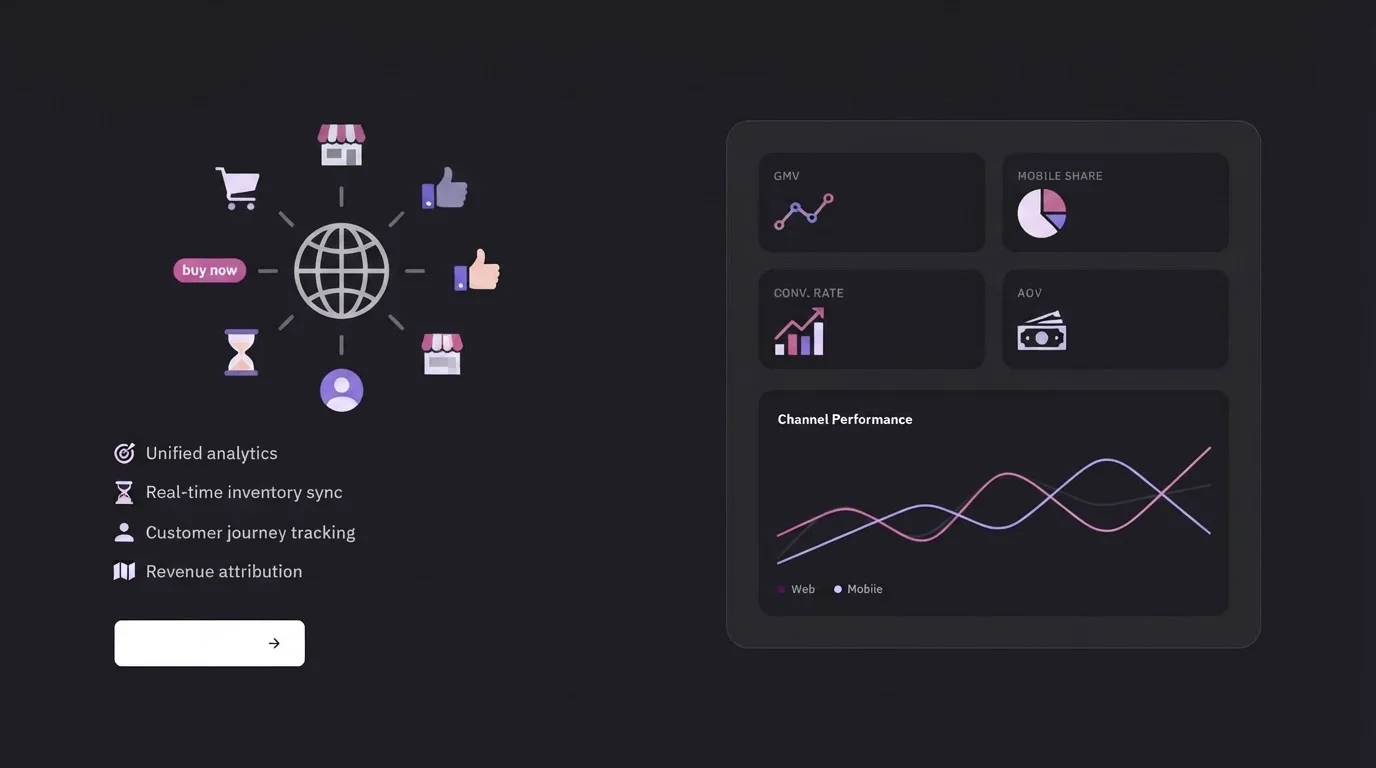
A primary strength of BigCommerce Enterprise is its ability to centralize complex data across high-volume sales environments. For B2B organizations, this means managing diverse channels—from direct wholesale portals to global marketplaces—within a single control panel. The platform allows users to sync, automate, and optimize their data across 150+ leading marketplaces, social commerce, and advertising channels, ensuring inventory and pricing remain consistent across the board.
Native B2B features like price lists, customer groups, and customer-specific catalogs allow for sophisticated account-based purchasing. However, enterprises should evaluate whether these features are truly integrated into the core architecture or layered on through extensions. In high-frequency environments, layered extensions can sometimes introduce latency that affects the buyer experience, particularly during peak transaction windows.
Managing Global Reach and Security
Security is a top priority for CTOs overseeing enterprise-grade commerce. BigCommerce Enterprise provides tools to help users manage their store’s privacy and security, maintaining compliance with PCI DSS standards and offering a multi-layered security infrastructure. This reduces the 'compliance tax' associated with open-source or on-premise solutions that require manual patching and frequent security audits.
Global expansion is also facilitated by the platform’s ability to connect with shoppers around the globe. This includes multi-currency support and localized checkout experiences. While these tools assist in regional entry, maintaining performance across different local networks remains a challenge. For organizations where mobile commerce is a priority, a responsive web design may not provide the speed and offline capabilities that field agents and buyers require in global markets.
The Integration Tax: Calculating True Cost of Ownership
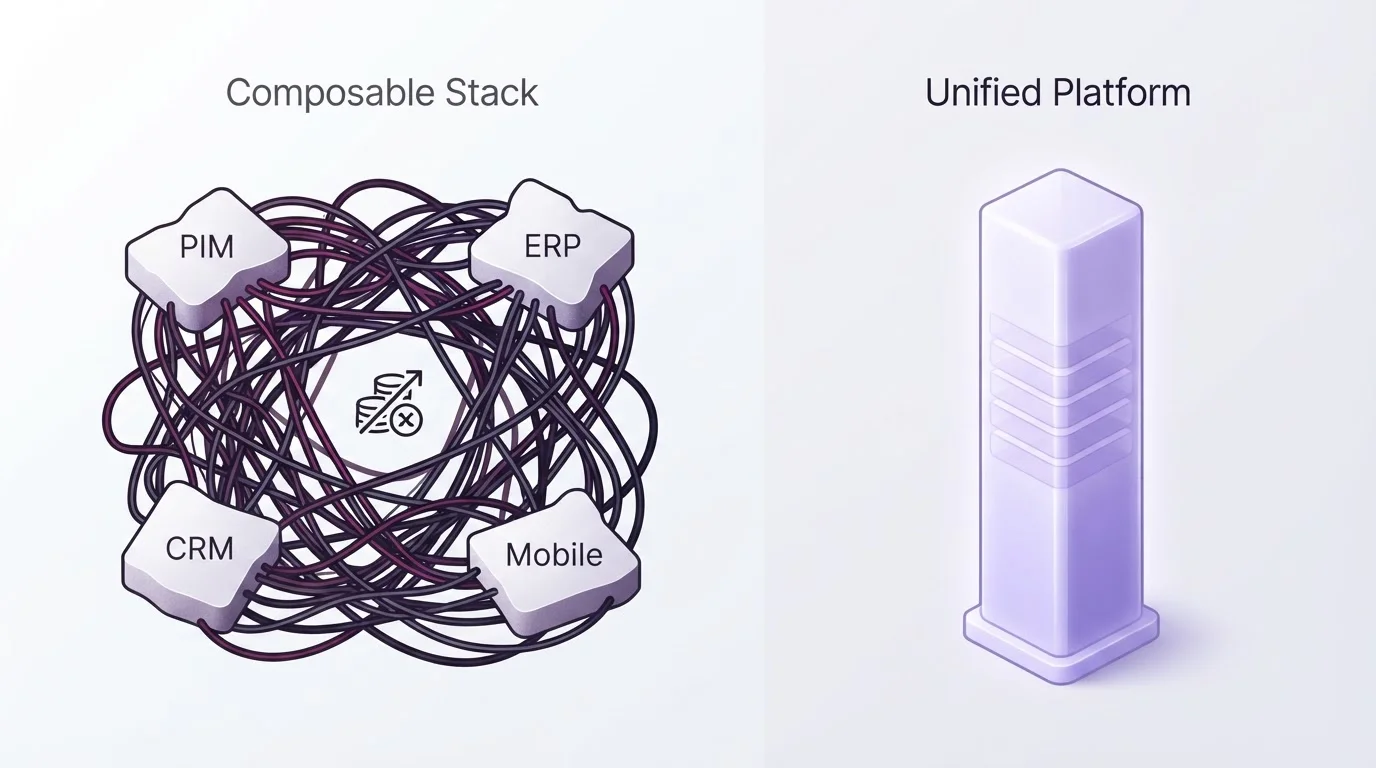
The composable strategy championed by BigCommerce allows for a 'best-of-breed' stack, but it comes with an 'integration tax.' Beyond the license fees—where the BigCommerce Enterprise Scale plan is listed at $33,333 per month—enterprises must factor in the developer hours required to maintain and optimize the connections between their storefront, ERP (like SAP or Oracle), and mobile channels.
Managing a fragmented stack can lead to data silos and a disjointed user experience. If your organization requires high-performance native mobile commerce, you may find yourself building and maintaining separate native apps from scratch, doubling your maintenance overhead. In contrast, unified platforms like Supercommerce are designed to eliminate this fragmentation by providing a single, high-performance architecture for both web and native mobile commerce out of the box.
Strategic Insights for Enterprise Commerce
Receive in-depth perspectives on unified platforms, scalability, and complex integrations for large-scale commerce operations.
Comparison: Composable Stack vs. Unified Commerce
When deciding between an Open SaaS composable stack and a unified enterprise solution, IT leaders should weigh the following trade-offs:
| Feature | BigCommerce Enterprise (Composable) | Unified Enterprise Platform |
|---|---|---|
| Mobile Strategy | Responsive Web / PWA / Custom Native | Native Mobile & Web (Single Logic) |
| Data Management | API-driven Sync between Vendors | Native Unified Data Model |
| Maintenance | Multiple Vendor Updates & Connectors | Single Platform Lifecycle |
| Performance | Variable (Depends on Integrations) | Consistent High-Performance native |
Evaluation Framework: Is BigCommerce the Right Fit?
To determine if BigCommerce Enterprise is the right choice for your next decade of growth, audit your operations against these four criteria:
- Integration Depth: Can the platform handle high-frequency data exchanges with your ERP without hitting API rate limits? Ensure your projected transaction volumes won't lead to sync delays.
- Mobile Experience: Does your buyer journey require the speed and utility of a native app, or is a responsive website sufficient? If mobile conversion is a key KPI, a 'responsive-first' approach may cost you revenue.
- B2B Specificity: Does the platform natively support your account-based purchasing rules, or will you need custom development to handle tiered pricing and volume discounts?
- Total Cost of Ownership: Look past the $33,333 monthly fee for the Enterprise Scale plan. Include the costs of third-party apps, security monitoring for each stack component, and the long-term cost of developer retention.
Frequently Asked Questions
Q: How much does BigCommerce Enterprise cost?
The BigCommerce Enterprise Scale plan is listed at $33,333 per month, though pricing can vary based on specific enterprise requirements and transaction volume.
Q: Does BigCommerce support native mobile apps?
BigCommerce is primarily a web-based platform. While it supports responsive web design, creating a high-performance native mobile app usually requires third-party tools or significant custom development.
Q: How does BigCommerce handle global marketplaces?
The platform allows users to sync, automate, and optimize data across 150+ leading marketplaces, social commerce, and advertising channels.
Q: What is the main differentiator of a unified commerce platform?
Unlike a composable stack that requires multiple integrations, a unified platform like Supercommerce provides web and native mobile commerce in a single solution built for large enterprises with complex needs.
BigCommerce Enterprise offers a flexible framework for businesses that want to build a custom commerce stack using the Open SaaS model. It is a strong contender for those who prioritize vendor choice for every layer of their architecture. However, for large enterprises processing high volumes of GMV, the operational burden of managing a fragmented stack can quickly outweigh the benefits of flexibility.
If your goal is to reduce technical debt and provide a superior, unified experience across web and native mobile, a dedicated enterprise platform like Supercommerce may offer better long-term value. By focusing on a single, high-performance architecture, you can gain the scale and control your team needs without the excessive fragmentation of a multi-vendor approach.