
On this page
For large organizations, selecting or staying on an enterprise commerce platform is rarely just about handling a sudden traffic spike. The critical question is whether the platform can support the structural complexity of a sprawling global operation. While Shopify Plus is a widely recognized solution for high-growth direct-to-consumer (DTC) brands, enterprise IT directors and digital commerce leaders must look beyond basic scalability to evaluate how it manages multi-brand portfolios, deep system integrations, and multi-channel synchronization.
Shopify Plus delivers speed-to-market and operational standardizations that reduce the internal burden of infrastructure management. However, its standardized software-as-a-service (SaaS) architecture introduces distinct boundaries when applied to complex environments requiring absolute control over data workflows and native user experiences. For enterprises facing these hurdles, evaluating alternative frameworks—such as unified platforms designed explicitly for high-performance web and native mobile sovereignty—becomes essential.
The Enterprise Baseline: Shopify Plus Core Offerings
Shopify Plus positions itself as an upgraded tier designed to alleviate the technical debt of hosting and core infrastructure maintenance. For organizations evaluating the baseline financial investment, the platform is listed at 2,300 USD or 2,500 USD per month, depending on the specific platform arrangement and contract structure selected.
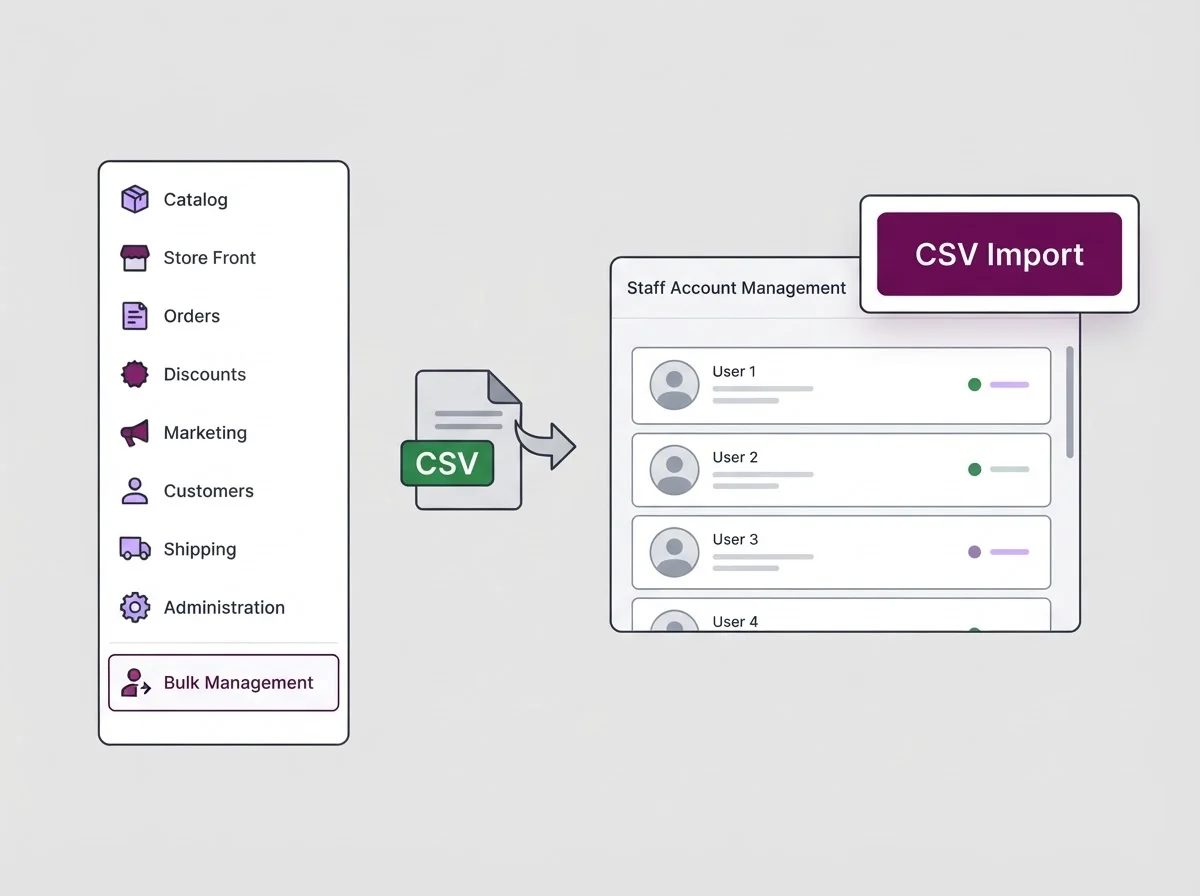
Beyond hosting, Shopify Plus offers targeted tools designed to streamline high-volume operational workflows. Merchants can see where apps are active, track permission changes, and manage products, collections, and metafields directly within the theme editor. For internal team management, administrators can create, suspend, or reactivate staff accounts in bulk via CSV import, which is a significant efficiency gain for large retail teams.
Operational and Logistics Capabilities
The platform includes features aimed at stabilizing both domestic and international commerce. For US-based merchants, Shopify Plus allows the creation of UPS return labels for domestic orders directly from the admin panel. In the realm of international sales, exchange rates are locked for up to 30 days on international returns, providing a level of financial predictability for global logistics.
In terms of financial flexibility, the platform offers Shopify Credit remittances for Texas-based merchants, with repayments due in full within a maximum of 18 months from the date funds are deposited. Furthermore, the platform supports in-store subscriptions through the Shopify Subscriptions app and enables shareable URLs and QR codes for quick-sale order links.
Structural Analysis: Multi-Brand and Catalog Complexity
A primary architectural point of evaluation for conglomerates is how a platform handles multiple distinct brands and deeply nested product catalogs. Shopify Plus uses expansion storefronts, which are traditionally optimized for regional localization or dedicated B2B tiers. However, for organizations running entirely separate brand identities with distinct operational rules, this can sometimes lead to fragmented administrative overhead and disconnected data tracking.
Catalog rigidity is another critical variable. Large enterprises with highly specialized B2B structures or multi-warehouse fulfillment logic often require capabilities beyond standard setups. In a standardized SaaS environment, achieving these configurations often requires a heavy reliance on external applications. Layering numerous plugins can create dependency cycles where diagnosing performance bottlenecks becomes a continuous maintenance task.
Platform Comparison: Shopify Plus vs. Supercommerce
| Feature | Shopify Plus | Supercommerce |
|---|---|---|
| Baseline Pricing | $2,300 - $2,500 / month | Enterprise Custom |
| Mobile Strategy | Responsive Web / WebView Wrappers | Unified Native Mobile Commerce |
| Catalog Structure | Expansion Stores (Regional/B2B focus) | Unified Multi-Brand/Complex Catalog |
| ERP Synchronization | API Rate Limited | High-Performance Deep Integration |
| Customization | Checkout Extensibility / Limited Backend | Full Architectural Sovereignty |
Strategic Insights for Enterprise Commerce
Receive in-depth perspectives on unified platforms, scalability, and complex integrations for large-scale commerce operations.
Integration Depth: ERP and Supply Chain Synchronization
An enterprise commerce platform must function as an extension of core business systems like ERP (Enterprise Resource Planning) and PIM (Product Information Management) solutions. Shopify Plus provides enhanced API call limits compared to standard plans, which handles conventional transactional data effectively.
However, for organizations requiring continuous, high-throughput synchronization across global distribution networks, API rate limiting remains a structural factor. During peak promotional windows, batch-processing schedules with legacy ERP systems like SAP or Oracle can encounter synchronization latency. While Shopify Plus allows users to create multiple shipments from a single purchase order to handle partial deliveries, enterprises with idiosyncratic supply chain logic must evaluate if the platform's sandboxed environments can execute proprietary operational rules without extensive workarounds.
Unified Experience: Native Mobile vs. Responsive Web
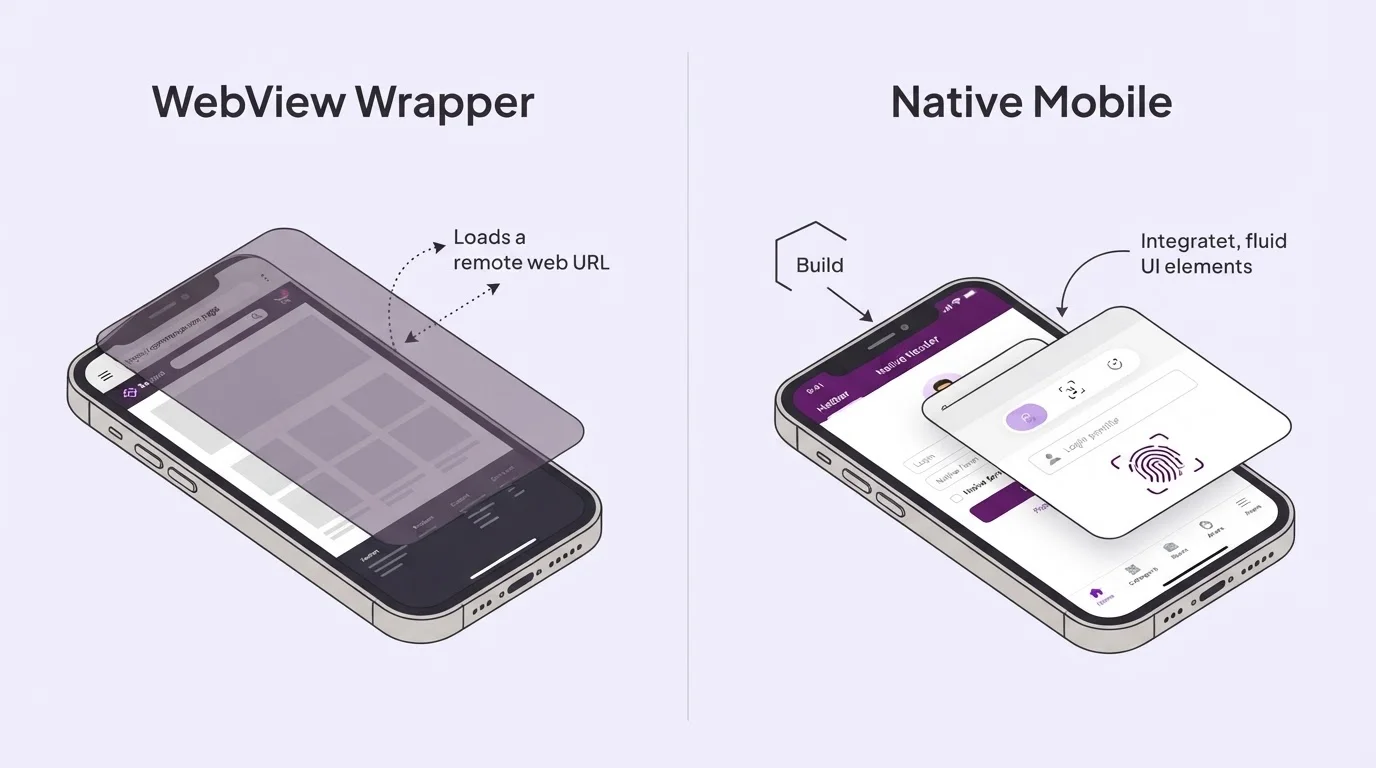
Mobile commerce represents a primary vehicle for customer retention, yet many brands operating on generic SaaS frameworks rely on third-party builders that wrap the web store in a mobile frame (a WebView). This model frequently lacks the fluid performance, biometric authentication, and low-latency push notification architectures that modern consumers expect.
Supercommerce distinguishes itself by eliminating the compromise between web and mobile execution. It is a unified enterprise commerce platform built from the ground up to drive both high-performance web storefronts and native mobile commerce from a single backend. By treating native mobile as a core architectural pillar rather than an add-on, it eliminates the synchronization errors and fragmented data flows common in decoupled architectures.
Enterprise Commerce FAQ
Q: What is the baseline monthly cost of Shopify Plus?
The platform is listed at 2,300 USD or 2,500 USD per month depending on the specific arrangement.
Q: How does Shopify Plus handle international return exchange rates?
Exchange rates are locked for up to 30 days on international returns to provide financial stability.
Q: Can staff accounts be managed in bulk?
Yes, administrators can create, suspend, and reactivate staff accounts in bulk using CSV imports within the admin panel.
Q: How does Supercommerce approach mobile commerce differently?
Unlike platforms that rely on web-view wrappers or third-party builders, Supercommerce provides a unified framework that powers both web and native mobile commerce natively for better performance and control.
Q: What are the limits on Shopify Credit remittances?
For eligible merchants, repayments are due in full within a maximum of 18 months from the deposit date.
Choosing the Path for Enterprise Control
Shopify Plus is a powerful choice for brands seeking rapid deployment and an extensive ecosystem of ready-made apps. For many business models, the standard combination of automated return tools and upgraded receipt editors minimizes overhead and accelerates time-to-market.
However, for large enterprises facing complex multi-brand architectures or requiring unthrottled ERP integration, the structural limits of generic SaaS frameworks can eventually impact growth. Platforms like Supercommerce are specifically built for these high-complexity needs, providing the unified scale and native performance required for the next generation of global commerce.