
On this page
Spryker is an enterprise-grade commerce platform designed for organizations that have outgrown rigid, monolithic systems. Built on a composable architecture, it allows businesses to assemble specific components—such as marketplace management, search, or checkout—into a tailored commerce stack. This approach provides the flexibility to build highly specialized operational logic without the constraints of a generic, out-of-the-box solution.
For CTOs and digital leaders at large-scale enterprises, the platform offers a foundation for testing new business models and managing complex catalogs. However, this level of modularity shifts the burden of orchestration to the internal team. Determining whether Spryker is the right fit requires a look at its developer-centric workflow, specialized industry features, and the long-term technical trade-offs of a headless strategy.
Core Features and Composable Workflow
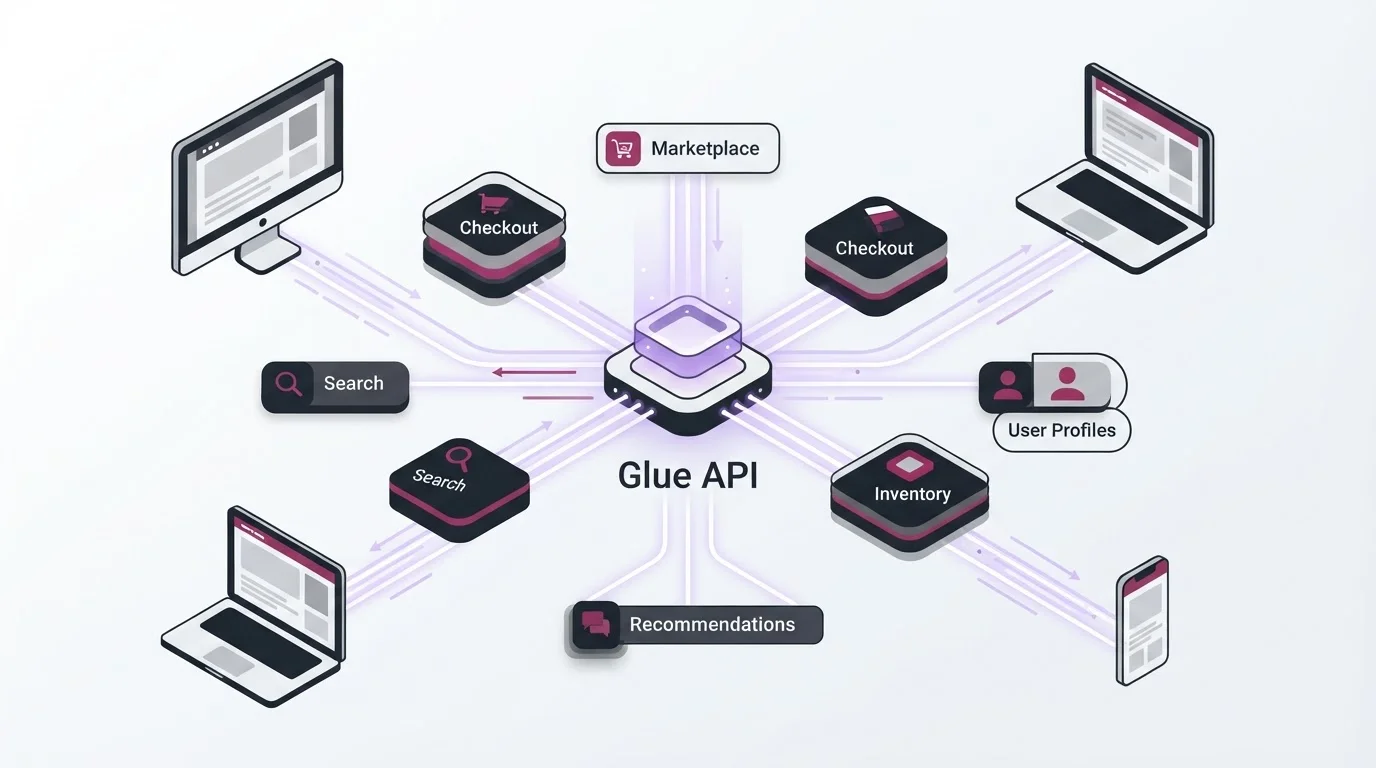
Spryker’s architecture is recognized in Gartner’s Hype Cycle for Digital Commerce across several key categories: API-Based Digital Commerce (headless), Composable Commerce, Modular Commerce, and Enterprise Marketplaces. Unlike platforms that force a specific front-end, Spryker provides back-end capabilities accessible via the Spryker Glue API.
The platform’s workflow is fundamentally designed for a "test-and-learn" approach. It enables teams to validate demand for new initiatives, such as a greenfield D2C launch or a B2B procurement portal, before committing to full-scale development. This capability is vital for enterprises exploring IoT-driven commerce or those needing to iterate rapidly in response to market shifts. By using practical tasks to build the project backbone, developers can customize every layer of the transaction cycle.
Specialized Industry Capabilities
Beyond standard retail functions, Spryker includes deep functionality for sectors with intricate transaction requirements:
- Automotive: Supports the complete customer lifecycle, enabling brands and dealers to manage after-sales transactions, service plans, and specific aftermarket parts.
- Industrial Goods: Provides a centralized self-service portal where customers can access 24/7 documentation, manage maintenance contracts, and order spare parts for specific machinery.
- Marketplaces: Facilitates dynamic supplier bidding through configurable rules and API-based triggers, streamlining multi-vendor operations.
- Life Sciences & MedTech: Integrates with patient data and IoT devices to support predictive maintenance and compliant ordering for medical equipment.
Identifying Product Fit: When to Choose Spryker
Spryker is not a "plug-and-play" tool; it is an engineering platform. Its strongest product fit is found in organizations where standardized commerce flows are insufficient for their operational reality.
Complex B2B and Wholesale Operations Organizations requiring multi-level approval workflows, offer management, and quick order tools benefit from Spryker's flexibility. Its API-first approach connects directly to existing ERP, CRM, and PIM systems, providing customers with real-time status updates without requiring a total replacement of legacy infrastructure.
Multi-Brand and Global Complexity If a strategy involves managing dozens of localized storefronts with unique catalogs from a single back-end, Spryker’s modularity allows for shared core services while maintaining distinct front-end experiences. It is particularly effective for businesses that need to streamline manual processes to free up resources for strategic growth.
The Strategic Trade-Offs: Complexity and Mobile Performance
While composability offers unmatched customization, it introduces specific challenges that can impact speed-to-market and total cost of ownership (TCO).
Technical Debt and Maintenance
Building a modular system requires a development team proficient in PHP, Symfony, and microservices architecture. Beyond licensing, the TCO is driven by the ongoing orchestration of third-party integrations, hosting, and security. Without a mature DevOps practice, the flexibility of modularity can lead to a fragmented stack that is difficult to maintain and scale.
The Native Mobile Challenge
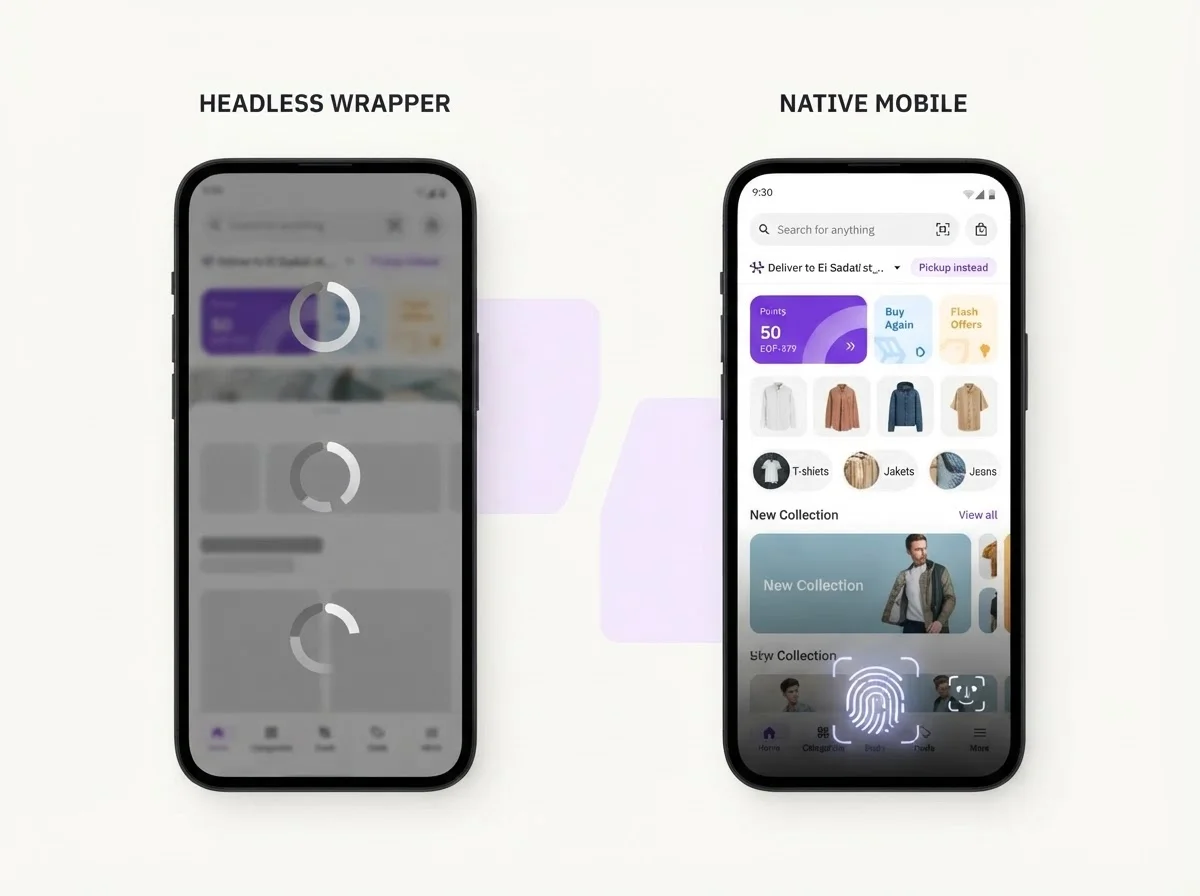
A significant consideration for modern enterprise commerce is the mobile experience. As a headless platform, Spryker does not provide a native mobile experience out of the box. Most implementations rely on Progressive Web Apps (PWAs) or responsive website wrappers.
For brands where mobile is a primary revenue driver, these "wrappers" often lack the performance and deep hardware integration (like biometrics or advanced push notifications) found in native apps. Building a high-performance native app on top of a headless platform typically requires a separate, dedicated development stream, which can double the technical complexity. This is a primary differentiator for unified platforms like Supercommerce, which provide high-performance web storefronts and native mobile commerce from a single, unified system designed for scale.
How to Evaluate Product Fit
Before committing to a composable strategy, enterprise leaders should audit their resources and long-term goals:
- Technical Depth Assessment: Do you have access to a dedicated team with deep Symfony experience? Composable success relies on the quality of the engineering team.
- Requirements Audit: Document your unique business processes. If the majority of your needs are standard, the overhead of a modular platform may not be justified.
- Mobile Priority: Determine if your customers require a high-performance native app. If native mobile is central to your growth, evaluate whether a headless wrapper will meet user expectations.
- Integration Mapping: Ensure the platform can connect to your specific CPQ, ERP, and IoT data points to maintain a single source of truth for inventory and customer data.
Strategic Insights for Enterprise Commerce
Receive in-depth perspectives on unified platforms, scalability, and complex integrations for large-scale commerce operations.
Final Verdict
Spryker is a powerful engine for enterprises that need to build bespoke, complex B2B or industrial marketplaces. Its API-first design and Gartner-recognized modularity make it a top contender for innovation-led organizations. However, the requirement for heavy development and the lack of a unified native mobile solution mean it is not the most efficient path for every large-scale brand.
For companies that prioritize a unified experience across web and native mobile without the fragmentation of a modular stack, Supercommerce offers an alternative. It provides a single platform to run high-performance storefronts with the scale and deep integrations large enterprises actually need.