
On this page
For enterprise brands processing over $100M in annual GMV, the primary barrier to growth is rarely a lack of traffic; it is the friction of rigid, fragmented systems. Traditional commerce setups often force a choice between high-maintenance open-source platforms or generic SaaS solutions that neglect native mobile experiences. Supercommerce positions itself as the unified alternative, providing a single, high-performance stack for both web storefronts and native mobile commerce. Selecting the right enterprise platform requires a deep look at how its features handle complex catalogs, ERP integrations, and global scale.
Unified Architecture: Beyond the WebView Trap
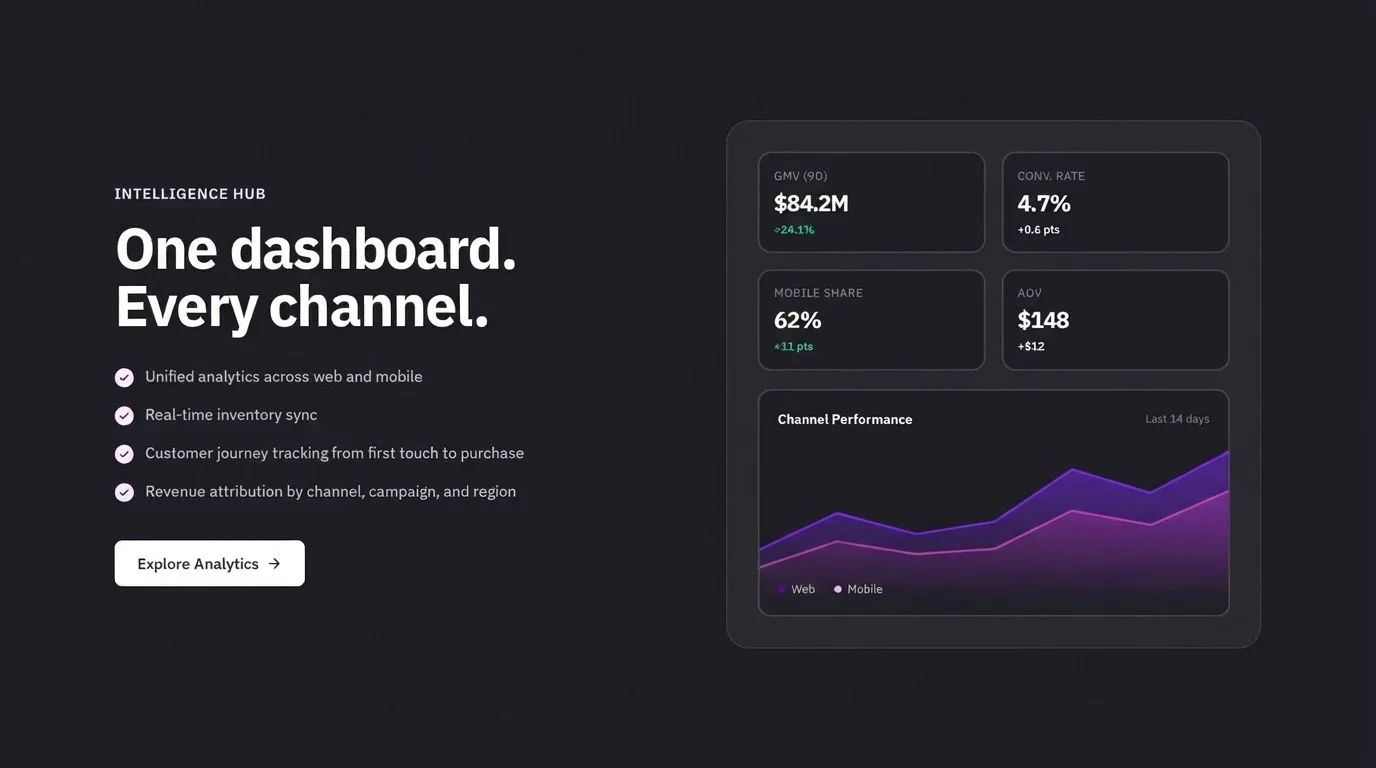
One of the most significant technical differentiators of Supercommerce is its approach to mobile. Most legacy platforms treat mobile as an extension of the web, often wrapping a responsive website in a WebView to create a pseudo-app. This approach frequently leads to sluggish performance, poor hardware integration, and a degraded user experience that hurts conversion rates. Supercommerce provides native iOS and Android apps alongside high-performance web storefronts from a single backend. This unified architecture ensures that product data, inventory, and customer behavior are synchronized in real-time across all touchpoints.
Core Features and Operational Workflow
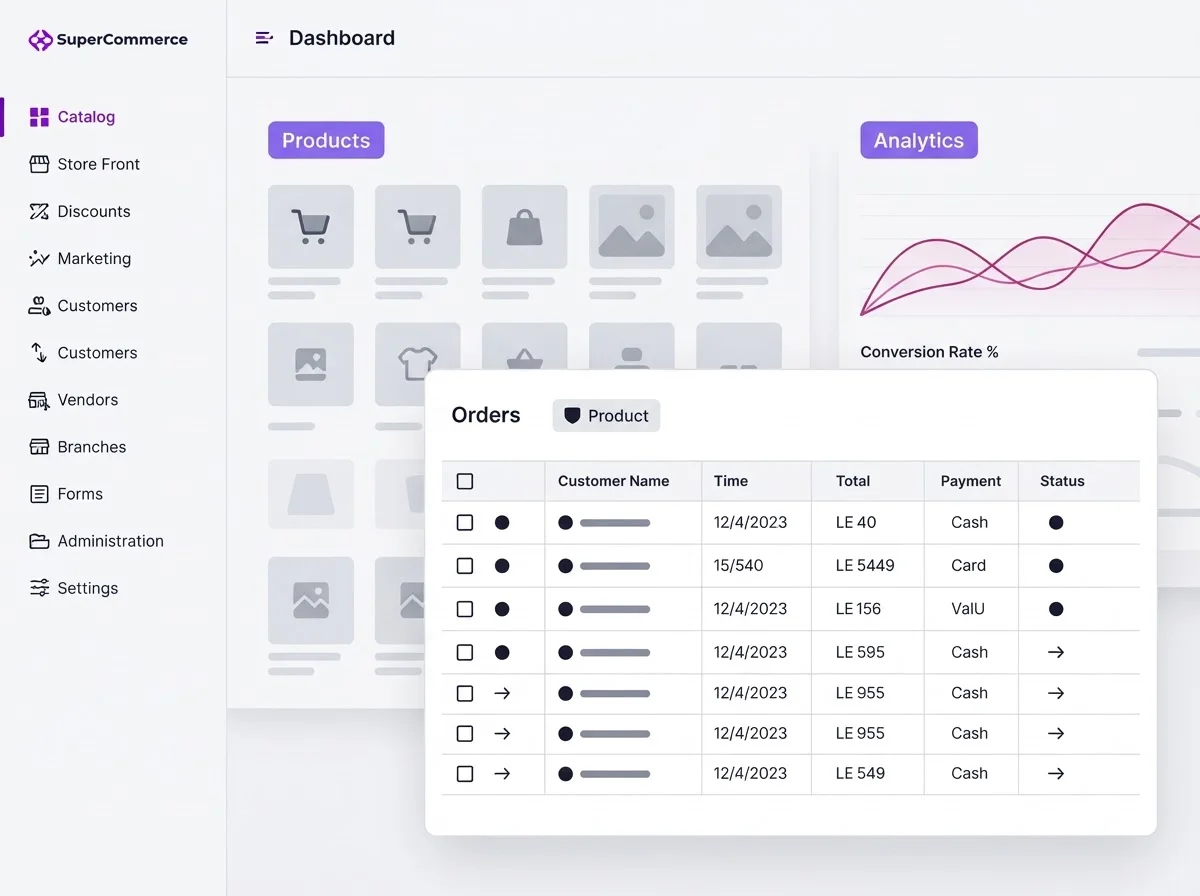
Supercommerce is built for scale, providing a suite of tools that manage the entire commerce lifecycle. The platform allows users to explore its management capabilities—including products, orders, promotions, and analytics—with a no-signup-required demo environment. This reflects a commitment to immediate operational accessibility for enterprise teams. Organizations can manage global launches and high-volume events without the infrastructure becoming a bottleneck.
Product and Catalog Management
Enterprises with complex catalogs, multi-brand setups, or custom pricing rules often find generic SaaS platforms too restrictive. Supercommerce supports deep catalog hierarchies and complex data models. The workflow for adding new products involves a centralized interface where merchandising teams manage high-resolution assets, localized descriptions, and tiered pricing rules. This setup is particularly effective for businesses that need to harmonize data across multiple global regions or distinct sub-brands.
Order Fulfillment and Promotions
The order management system (OMS) is designed to handle high transaction volumes without performance degradation. Once a customer completes a purchase—whether on the web or through the native app—the system triggers a fulfillment workflow that tracks the shipment from the warehouse to the customer door. Concurrently, the promotions engine allows for sophisticated discount logic, such as B2B-specific pricing or mobile-only offers, which are applied instantly at checkout to drive re-engagement.
Unified Analytics and Team Control
Data fragmentation is a recurring challenge for enterprises managing high transaction volumes. Supercommerce addresses this through a Unified Commerce Intelligence dashboard. This provides a single view of the customer journey, attributing revenue by channel, region, and specific marketing campaigns. To manage large internal teams, the platform utilizes granular Role-Based Access Control (RBAC), ensuring that IT, merchandising, and customer support teams have only the permissions they need.
Enterprise Comparison: Supercommerce vs. Magento
For many IT leaders, the decision often comes down to choosing between the total control of a legacy platform like Magento (Adobe Commerce) or the agility of a unified solution. Below is a comparison of how Supercommerce stacks up against traditional enterprise alternatives based on architectural and operational needs.
Strategic Insights for Enterprise Commerce
Receive in-depth perspectives on unified platforms, scalability, and complex integrations for large-scale commerce operations.
| Feature | Supercommerce | Magento (Adobe Commerce) |
|---|---|---|
| Mobile Experience | Native iOS & Android Apps | Responsive Web / Third-party Apps |
| Backend Architecture | Unified Web & Mobile | Disparate or Headless Extensions |
| Integrations | Includes up to 3 Pre-built | Highly Custom / Unlimited |
| Infrastructure | Dedicated / Managed | Self-hosted or Adobe Cloud |
| Maintenance | Included SaaS Updates | Manual Version Upgrades |
| Time-to-Market | High (Unified Stack) | Moderate (Heavy Dev Required) |
Determining the Product Fit
Supercommerce is not a general-purpose tool; it is a specialized solution for large-scale operations. Determining if it is the right fit involves weighing the benefits of a managed, unified stack against the need for hyper-niche customization. The platform is ideal for enterprises that have outgrown their current setup due to scalability issues or mobile neglect.
When Supercommerce is the Best Fit
If your team is spending more time maintaining server infrastructure and patching security vulnerabilities than improving the customer experience, the move to a dedicated enterprise SaaS model is likely overdue. Supercommerce is specifically built for brands that require a high-conversion mobile app but do not want the overhead of managing a separate codebase for iOS, Android, and Web. It serves enterprises processing $100M+ in annual GMV that require deep scale and control.
Important Trade-offs to Consider
While the unified nature of Supercommerce increases agility, it may present limitations for businesses with highly unique requirements that fall outside its core workflows. The platform includes up to 3 integrations in its primary configurations, which typically covers essential ERP, PIM, or WMS systems like SAP, Oracle, and Salesforce. Organizations with bloated tech stacks involving dozens of legacy plugins may need to consolidate their ecosystem before migrating to ensure they stay within the platform high-performance guardrails.
Frequently Asked Questions
Q: How does Supercommerce handle high-traffic flash sales?
The platform uses dedicated, multi-region infrastructure to ensure that global traffic surges do not cause performance degradation.
Q: Is the mobile experience truly native?
Yes. Unlike platforms that use WebViews to wrap a website, Supercommerce provides native iOS and Android apps designed for speed and offline-capable browsing.
Q: Can we use our existing ERP with Supercommerce?
Yes, the platform provides pre-built connectors for major ERP, PIM, and WMS systems like SAP, Oracle, and Salesforce to ensure data flows seamlessly.
Q: What is the GMV threshold for Supercommerce?
The platform is specifically optimized for enterprises processing $100M+ in annual GMV that require deep scale and control.
Supercommerce offers a compelling path for enterprises that need to move away from the high-maintenance complexity of legacy platforms without sacrificing the control required for $100M+ GMV scale. By unifying web and native mobile commerce into a single workflow, it eliminates the technical debt associated with fragmented systems. For IT Directors and CTOs, the evaluation should center on whether the platform high-performance native apps and managed infrastructure align with the strategic goal of reducing operational friction and maximizing channel-wide revenue.