
On this page
For digital commerce executives, CTOs, and IT directors managing high-volume brands, selecting an enterprise commerce infrastructure is a core financial and operational decision. While mid-market solutions often focus purely on setup ease, true enterprise-grade platforms must be evaluated by how their cost structures evolve alongside growth. At high Gross Merchandise Volume (GMV) levels, platform fees shift from simple fixed overhead into multi-layered financial models influenced by transaction volumes, technical architectures, and third-party dependencies.
Shopify Plus is a frequent consideration for brands scaling their operations, offering an enterprise-focused structure designed to support expansion. However, for large businesses with complex requirements, the long-term financial commitment extends beyond the initial baseline. To build an accurate total cost of ownership model, decision-makers must look closely at base subscription paths, variable scaling mechanisms, and the downstream costs required to bridge a standard template platform with complex enterprise operational realities.
The Baseline Costs of Shopify Plus Enterprise Infrastructure
The foundational layer of an enterprise commerce budget is the fixed platform subscription fee. This baseline fee grants access to core enterprise commerce capabilities, expanded API limits, and specialized organization-level administration tools. For a standard Shopify Plus agreement, the entry-level subscription fee is listed at 2,500 USD per month, while certain contract structures or configurations may feature entry paths starting at 2,300 USD.
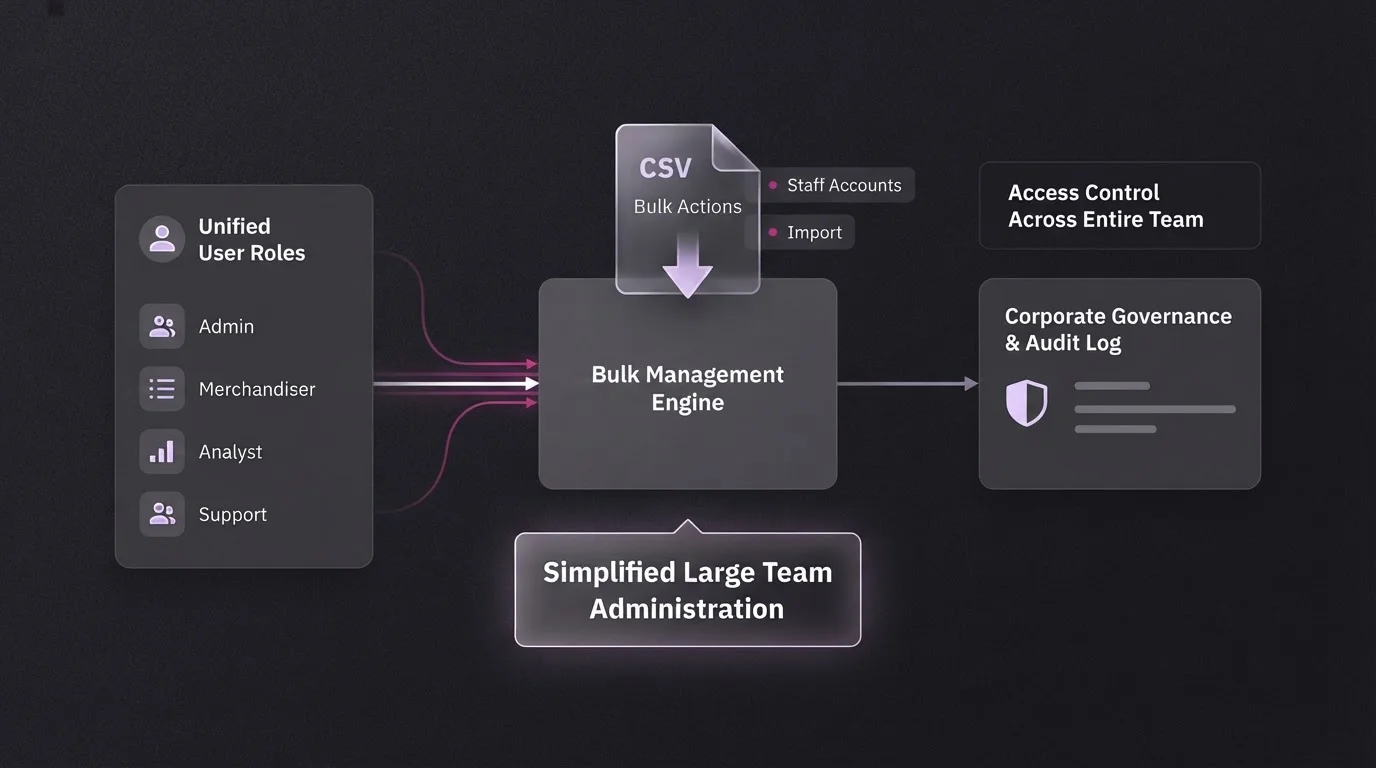
This core investment provides infrastructure capabilities designed to simplify large retail team operations. For instance, Shopify Plus lets users manage users and roles across their entire team from one place, ensuring corporate governance. Large businesses can also create, suspend, and reactivate staff accounts in bulk with CSV import in Shopify admin, which minimizes administrative friction when managing seasonal employees or distributed brand teams. Additionally, the native workspace enables merchandising teams to manage products, collections, markets, metafields, and more without leaving their workflow in the theme editor, accelerating catalog updates.
Navigating Scaling and Variable Volume Costs
For enterprise commerce platform pricing, the flat monthly subscription is rarely the final operational cost. Most enterprise platforms utilize a variable scaling mechanism that captures a percentage of transaction volume once baseline thresholds are crossed. When an enterprise's monthly sales volume expands, the platform pricing models typically transition from a flat baseline into a revenue or transaction-sharing fee structure.
This variable component means that every successful seasonal event or marketing campaign impacts infrastructure expenditure in real time. For high GMV ecommerce solutions cost modeling, a percentage-based fee functions as a tax on top-line growth. While infrastructure scaling is necessary to support high concurrency, IT directors and financial officers must forecast how these variable models will scale across multi-year revenue projections, ensuring that technical success does not directly erode net operating margins.
Evaluating the Ecosystem and Operational Multipliers
Beyond direct subscription and volume fees, the operational architecture of a platform dictates a significant share of the total cost of ownership. Enterprise merchants often require complex workflows for retail spaces, logistics coordination, and international accounting that generic core code may not support out of the box.
To fulfill these distinct requirements, brands heavily leverage modular add-ons and external applications. While this offers rapid extensibility, it introduces ongoing architectural governance needs. To assist with this management, Shopify Plus lets users see where apps are active in their store, track permission changes, and make informed decisions about their app stack. However, even with this system transparency, accumulating paid monthly app subscriptions for complex B2B logic, customer routing, and specialized middleware creates a recurring cost center that alters the true baseline platform expenditure.
Omnichannel Expansion and Logistics Elements
For brands coordinating online channels alongside brick-and-mortar storefronts, combining physical retail and digital commerce impacts the technical ledger. Shopify Plus provides specific tools aimed at bridging these channels natively. For instance, the platform lets users offer subscriptions in-store with the Shopify Subscriptions app, expanding recurring revenue options at physical checkouts. Furthermore, sales teams can create payment links for quick sale orders with shareable URLs and QR codes, enabling flexible remote checkout options.
Logistics and physical operations also demand deep administrative support. The admin tools allow managers to create UPS return labels for US domestic orders directly from their Shopify admin, simplifying reverse logistics. For retail points of sale, Shopify Plus lets users manage every printed receipt type in one upgraded editor — no Liquid required. When receiving inventory from supply chains, the system allows teams to create one or more shipments from a PO to receive stock, handle partial deliveries, and route inventory to the right location. Yet, for global enterprises utilizing custom enterprise resource planning (ERP) systems, the cost of custom middleware to integrate these native features must be fully factored into the evaluation.
International Financial Controls and Working Capital
Cross-border commerce demands robust safeguards to mitigate currency volatility and support international operations. To protect enterprise margins during cross-border trade, Shopify Plus includes exchange rates that are locked for up to 30 days on international returns. This mechanism ensures that currency fluctuations during return processing cycles do not inflict unexpected losses on international transactions.
From a working capital perspective, access to flexible business financing tools is a key strategic variable for corporate liquidity. For eligible businesses in specific regions, Shopify Plus lets users enable Shopify Credit remittances using Shopify Payments balance for Texas merchants. Under these financing terms, repayments are due in full within a maximum of 18 months from the date funds are deposited. Evaluating these corporate terms helps CFOs and technology directors balance platform costs against seasonal working capital requirements.
Enterprise Total Cost of Ownership (TCO) Comparison
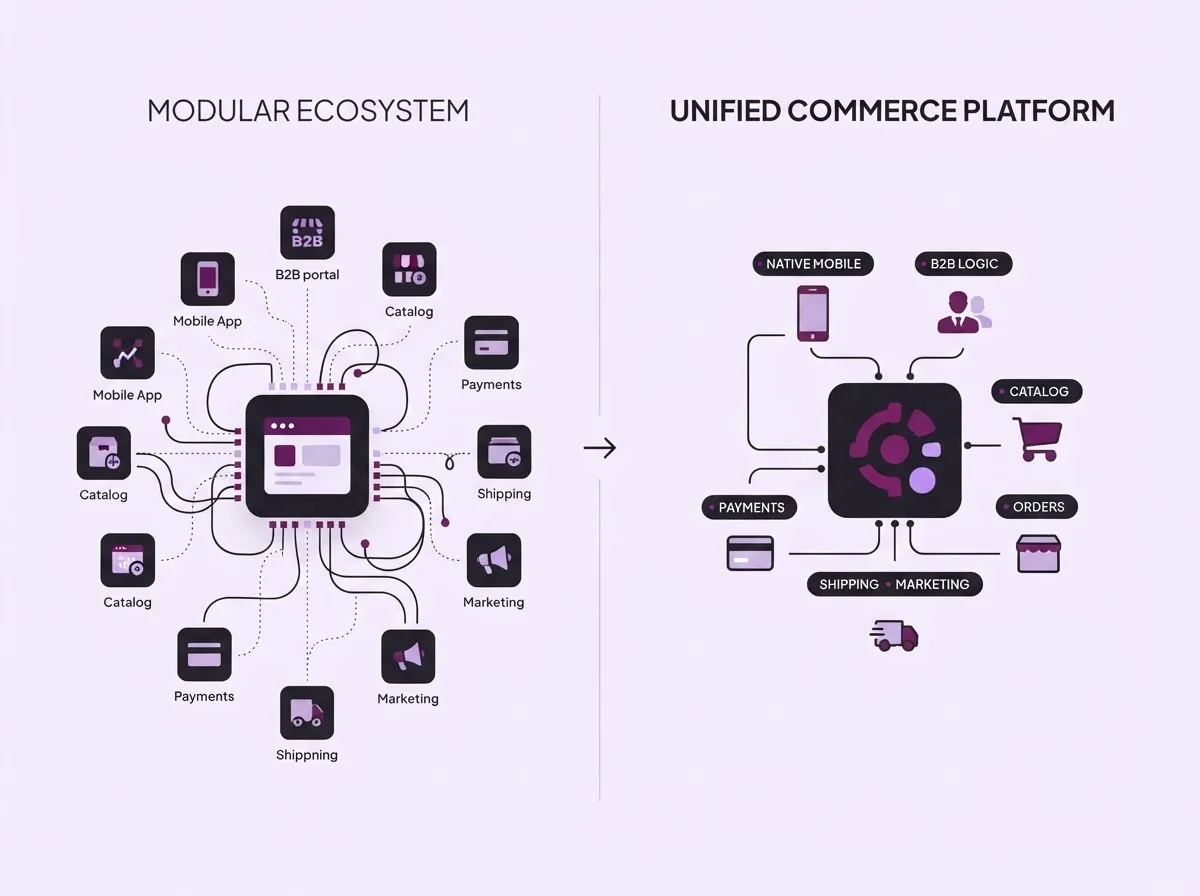
Accurately evaluating shopify plus cost against alternative enterprise ecommerce platform pricing requires a structured look at architecture, direct platform fees, and ecosystem components. The following framework contrasts a standard modular ecosystem model with a unified commerce architecture built specifically for high-performance enterprise operations.
TCO Analysis: Shopify Plus vs. Unified Enterprise Platforms
| Cost Component | Shopify Plus Enterprise Architecture | Unified Enterprise Platforms (e.g., Supercommerce) |
|---|---|---|
| Base Subscription | Fixed entry baseline listed at 2,500 USD per month, with options starting at 2,300 USD. | Predictable enterprise-tier models designed specifically for high-volume operators without introductory levels. |
| Scaling Fee Model | Scales into percentage-based variable transaction fees as monthly GMV milestones are reached. | Infrastructure-focused scaling models that optimize top-line revenue preservation at scale. |
| Mobile Storefronts | Often relies on third-party application plug-ins, custom WebViews, or high-cost custom native developments. | Native iOS and Android application commerce engine engineered directly into the core platform layer. |
| Application Ecosystem | Requires explicit application stack additions for customized B2B logic, custom workflows, and deep data routing. | Advanced enterprise workflows, global multi-brand coordination, and B2B logic built natively without add-on apps. |
| Team Governance | Bulk CSV import for staff account creation, suspension, and single-location user and role management. | Advanced multi-organization access hierarchies and distributed global permission management. |
| Financial Operations | Includes locked 30-day exchange rates on international returns; maximum 18-month terms for Shopify Credit. | Integrated multi-currency financial orchestration and direct multi-entity corporate settlement frameworks. |
| API Architecture | Governed by platform rate limits that may necessitate external middleware for intensive high-volume syncs. | High-performance, uncapped enterprise APIs optimized for real-time legacy ERP and complex CRM synchronization. |
Why High GMV Operations Outgrow Fragmented Tech Stacks
As large enterprises expand, the structural inefficiencies of a highly fragmented commerce tech stack become increasingly clear. Generic platforms often dictate a web-first approach where native mobile commerce is treated as an adjacent add-on rather than a core channel. In these environments, mobile users are frequently routed through responsive desktop store themes wrapped in basic WebView containers. This architecture often degrades load times, user interactions, and transaction success metrics compared to pure native device software.
For an enterprise managing massive consumer volumes, subtle drops in mobile performance impact substantial revenue flows. This realization drives market leaders away from fragmented, plugin-heavy setups and toward completely unified architectures. Supercommerce provides a single, high-performance platform engineered from the ground up to power high-performance web storefronts and native mobile commerce simultaneously. By eliminating complex third-party wrappers, expensive external apps, and fragile middleware connectors, Supercommerce gives enterprise teams deep architectural control, clear visibility, and predictable pricing that supports scale without taxing top-line success.
Conclusion: Choosing Infrastructure for Sustainable Enterprise Scaling
Selecting an enterprise commerce framework is a long-term capital and operational commitment. While Shopify Plus offers an accessible framework with clear 2,300 USD or 2,500 USD per month starting lines, the full financial scope for a high GMV organization is defined by how the variable transaction model scales with volume and the volume of external applications required to manage enterprise logic.
True enterprise value centers on cost predictability, absolute architectural command, and premium mobile performance delivered out of the box. For enterprises focused on maximizing profit margins while deploying sophisticated multi-channel operations, assessing a unified platform like Supercommerce offers a strategic path forward. Selecting a platform that supports complex catalog logic and native mobile deployment natively allows large businesses to expand efficiently without structural infrastructure limitations.
Strategic Insights for Enterprise Commerce
Receive in-depth perspectives on unified platforms, scalability, and complex integrations for large-scale commerce operations.
Frequently Asked Questions
Q: What is the baseline starting price for a Shopify Plus subscription contract?
The baseline subscription fee for a standard Shopify Plus contract is listed at 2,500 USD per month, with certain configurations or agreement paths starting at 2,300 USD.
Q: How does Shopify Plus assist corporate teams with bulk staff administration?
Shopify Plus lets users create, suspend, and reactivate staff accounts in bulk with CSV import in Shopify admin, and manage users and roles across their entire team from one place.
Q: How are international currency return risks managed on the platform?
The platform addresses currency volatility by ensuring that exchange rates are locked for up to 30 days on international returns, helping global brands protect margin consistency.
Q: What are the primary terms for the Shopify Credit remittance feature?
For merchants in supported regions, Shopify Plus lets users enable Shopify Credit remittances using Shopify Payments balance for Texas merchants, with all repayments due in full within a maximum of 18 months from the fund deposit date.
Q: Can marketing and merchandising teams modify product attributes within the design interface?
Yes, Shopify Plus lets users manage products, collections, markets, metafields, and more without leaving their workflow in the theme editor, reducing developer reliance.