
On this page
Evaluating a commerce platform at the enterprise level requires a precise distinction between configuration, extensibility, and true architectural customization. While generic SaaS platforms provide rapid deployment, large-scale enterprises often encounter a capability ceiling when unique business logic—such as multi-step approval hierarchies or complex ERP synchronizations—clashes with a provider's multi-tenant architecture. The decision to adopt Shopify Plus hinges on whether your workflows can be achieved through its sandboxed extension layers or if your operational complexity requires the deeper control of a unified enterprise commerce platform built for high-performance scale.
For IT Directors and CTOs, the evaluation is not just about features but about architectural debt. A platform that relies on a fragmented ecosystem of third-party apps to handle core business logic often introduces risks in security, data integrity, and performance. Understanding the boundaries of the Shopify Plus framework is the first step in determining if your brand can thrive within its standardized environment or if you require a more flexible, unified architecture.
The Enterprise Need for Customization vs. SaaS Extensibility
Enterprise commerce operations are rarely standard. They involve intricate workflows, specialized pricing rules, and multi-brand setups that basic out-of-the-box settings cannot accommodate. When evaluating a platform, IT leaders must define verifiable software requirements—documented statements of what the system must do and how it must perform—rather than mere preferences. The goal is to determine if the platform adapts to your proven business processes or if it forces your team to conform to its default settings.
According to Transformation Process in Business: How It Works (2026), workflow automation tools and integrations are essential for operational teams to implement and refine redesigned commerce processes. For a company managing significant volume, a platform's inability to handle a specific order routing rule or a unique B2B buyer hierarchy can result in manual overhead or technical debt. The evaluation process must start with a detailed mapping of every critical workflow, documenting its current state and identifying potential gaps where native features or third-party integrations might fall short.
Understanding the Shopify Plus Customization Framework
Shopify Plus operates as a multi-tenant SaaS platform, meaning the core platform code is not directly modifiable. Instead, customization is achieved through three primary layers: the app ecosystem, theme modifications using Liquid, and custom development leveraging APIs and Shopify Functions. For enterprise management, the platform allows users to manage roles and team access across the entire organization from one place, which is vital for security but remains within predefined permission structures.
Architecturally, the platform has shifted toward Checkout Extensibility and Shopify Functions, which replace legacy Ruby scripts with WebAssembly-based logic. While this improves stability and performance, it also enforces a sandboxed environment where developers cannot run arbitrary code in the checkout DOM. This ensures the checkout remains performant and secure, but it can limit highly specialized front-end interactions that some enterprise brands require for unique customer journeys. The trade-off is clear: you gain platform stability at the cost of deep, low-level architectural control.
Pricing as an Enterprise Proxy
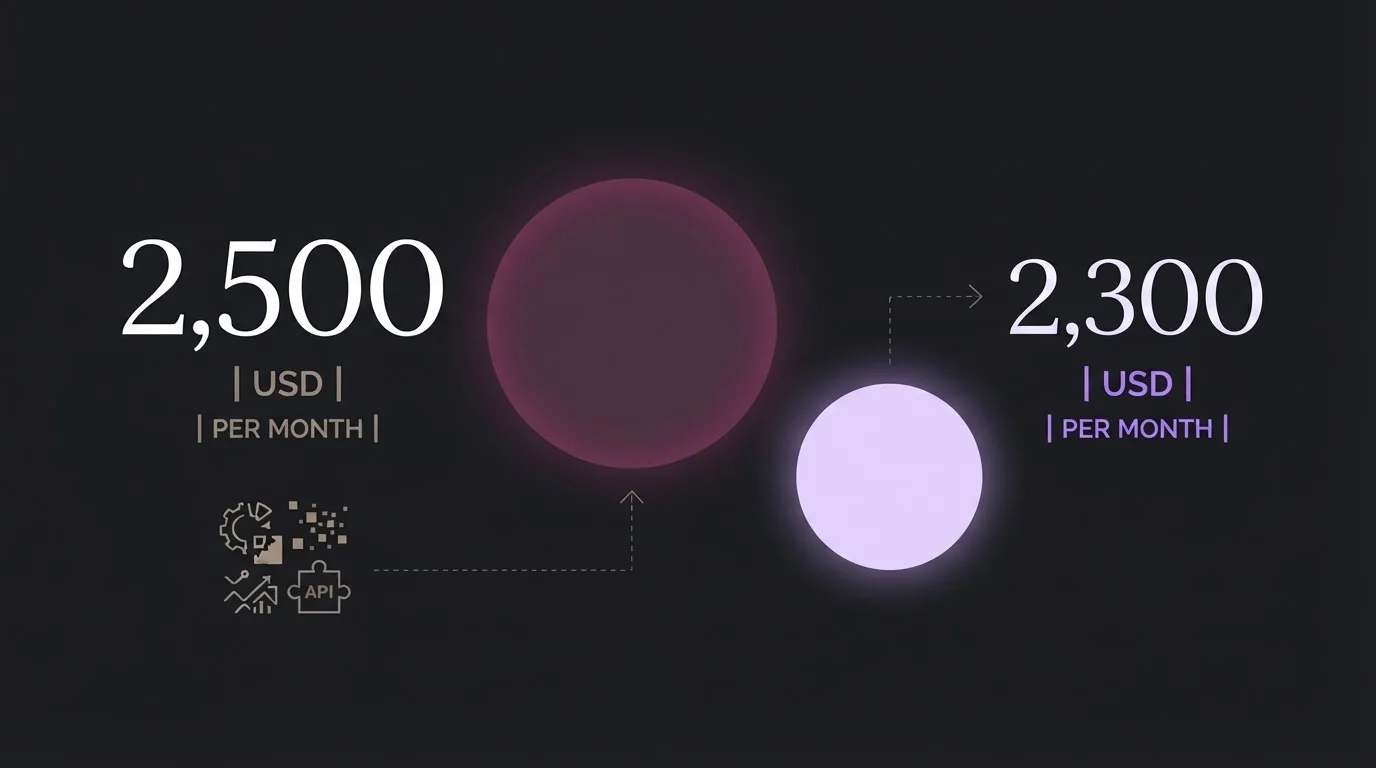
The pricing structure of Shopify Plus reflects its standardized nature. The platform is listed at 2,500 USD per month. For brands seeking longer-term predictability, a three-year commitment is listed at 2,300 USD per month. Beyond the base fee, IT leaders must factor in the total cost of ownership (TCO), including the cumulative costs of a fragmented app stack and the custom development required to maintain integrations across the platform’s periodic API updates.
Evaluating Specific Workflow Adaptations

To assess if a platform can handle your unique business logic, you must evaluate its hard limits against your operational scale. For instance, Shopify Plus includes support for 20 locations. For enterprises with complex global distribution or expansive physical storefront networks, this limit is a critical evaluation point. If your inventory network exceeds this, you must determine if the native order routing can be extended via API or if it necessitates a more flexible, custom architecture.
Logistics and returns management are equally vital. Shopify Plus enables users to create UPS return labels for US domestic orders directly from the admin and manage stock shipments from purchase orders (POs) to handle partial deliveries and route inventory to the right location. However, unique enterprise requirements—such as specialized regional carriers or complex multi-warehouse stock routing—often require third-party apps. Enterprises should use available visibility tools to track permission changes and monitor the stability of their app stack to ensure third-party tools do not introduce security risks or latency.
Strategic Insights for Enterprise Commerce
Receive in-depth perspectives on unified platforms, scalability, and complex integrations for large-scale commerce operations.
When Standard Customization Options Fall Short
Despite its extensibility, standardized SaaS platforms have architectural boundaries that can become friction points for complex enterprises. These limitations often appear in financial operations and international logistics. For example, Shopify Plus includes a policy where repayments are due in full within a maximum of 18 months from the date funds are deposited for certain credit programs. If your enterprise financial model requires more flexible schedules, these platform-imposed limits could necessitate significant workarounds.
International operations also face specific constraints. The platform locks exchange rates for up to 30 days on international returns. While this provides predictability, it may clash with extended return windows offered by premium brands. Furthermore, while the platform has upgraded its editor to manage printed receipt types without Liquid, businesses with highly specialized, dynamic receipt requirements or complex discount logic for quick sale orders may find standard shareable URLs and QR code payment links insufficient for their existing POS workflows.
Unified Performance: The Supercommerce Alternative
For many large enterprises, the primary challenge of an app-dependent ecosystem is fragmentation. Relying on dozens of third-party apps to handle complex catalogs, custom pricing, and ERP integrations creates a fragile environment where one update can break a critical workflow. Supercommerce provides a unified alternative designed specifically for high-performance businesses facing these challenges.
Unlike rigid solutions that rely on responsive websites wrapped in a WebView, Supercommerce delivers high-performance web storefronts and native mobile commerce from a single platform. This gives IT leaders the scale and deep integration capabilities their teams actually need, without the capability ceiling of generic platforms. For enterprises facing challenges with complex catalogs or neglected mobile experiences, a unified architecture offers superior control and long-term stability over a fragmented, app-based stack. By consolidating these functions, teams can focus on innovation rather than troubleshooting third-party compatibility issues.
Frequently Asked Questions
Q: Can I modify the core checkout code on Shopify Plus?
No. Direct modification of the checkout core is not permitted. Customization is handled via Checkout Extensibility and Shopify Functions, which operate in a secure, sandboxed environment to ensure platform stability.
Q: How many inventory locations does Shopify Plus support?
The platform includes support for 20 locations. Enterprises with larger distribution networks should evaluate how their inventory management systems will integrate with this specific parameter.
Q: What is the primary difference between Shopify Plus and Supercommerce for large enterprises?
Shopify Plus is a SaaS platform that extends its functionality through an app ecosystem and sandboxed APIs. Supercommerce is a unified enterprise platform providing native mobile experiences and deeper architectural control for complex catalogs and integrations without the overhead of fragmented third-party apps.
Q: Are there limits on international exchange rates for returns?
Yes, Shopify Plus includes a policy where exchange rates are locked for up to 30 days on international returns.
Choosing a commerce platform for a high-volume enterprise is a strategic decision that balances ease of use with the necessity of control. Shopify Plus offers a robust extensibility framework, but its success depends on whether its specific limits—such as location caps, repayment terms, and exchange rate locks—align with your business model. A successful implementation requires a rigorous gap analysis to ensure that your most critical, high-value workflows can be maintained without compromising performance or operational security. For those who find these boundaries too restrictive, unified enterprise solutions like Supercommerce offer a path toward deep integration and architectural freedom.