
On this page
For enterprises managing a portfolio of brands across diverse global markets, the choice of a commerce platform is a strategic decision centered on scalability, localization, and architectural consolidation. Salesforce Commerce Cloud (SFCC) has long been a staple for large-scale retail, offering a robust infrastructure designed to handle high transaction volumes and complex regional requirements. However, as digital commerce matures, the trade-offs between SFCC’s extensive ecosystem and its inherent technical rigidity have become more pronounced for $100M+ GMV companies.
Evaluating SFCC for multi-brand operations requires looking beyond the marketing collateral. While the platform offers powerful tools for site separation and internationalization, enterprises must weigh these against GMV-based pricing models, implementation timelines that often stretch to 12 months, and a mobile experience that frequently lags behind native standards. This article evaluates the platform’s architectural fit for complex global setups and introduces how a unified approach like Supercommerce addresses the specific pain points of the modern high-performance enterprise.
Architectural Foundation: Realms, Sites, and Storefronts
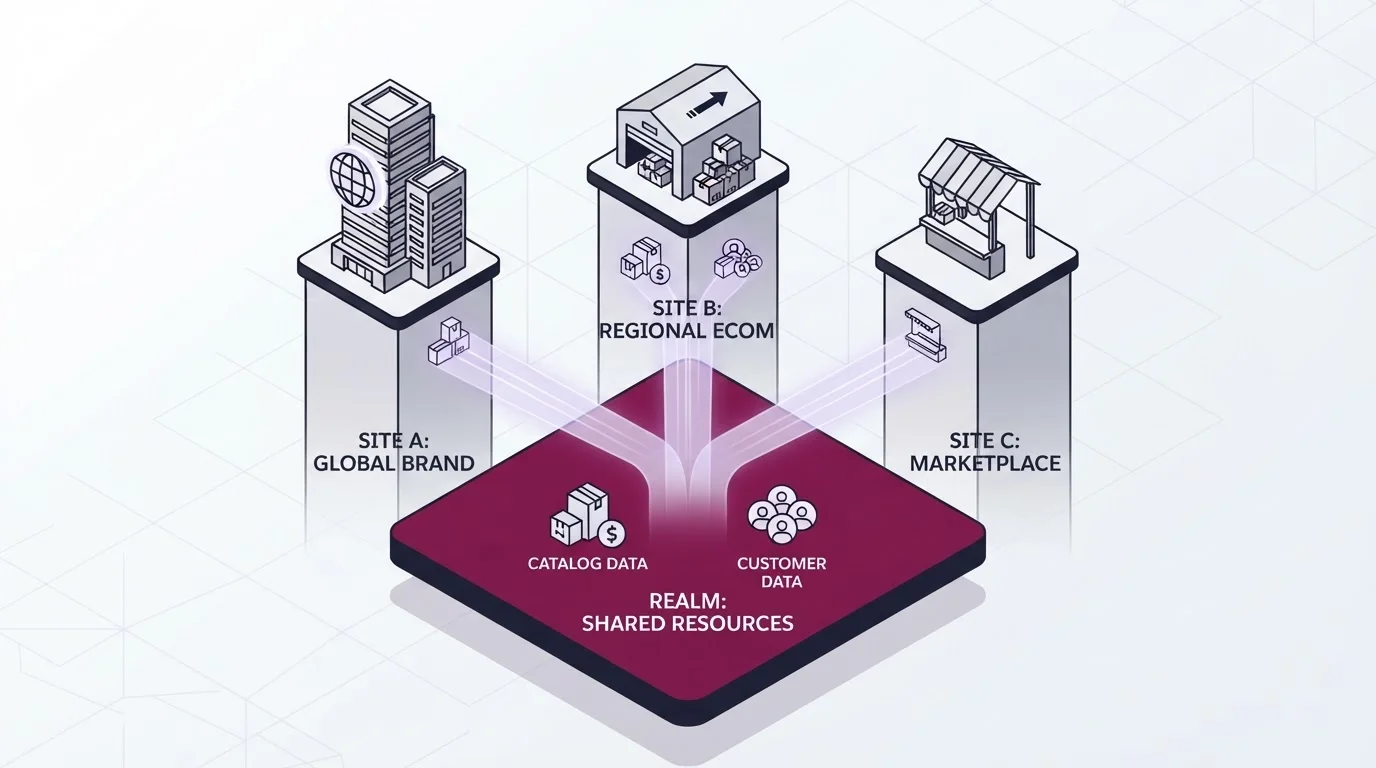
Salesforce Commerce Cloud operates on a specific hierarchical structure that dictates how multiple brands and regions are managed. At the top level sits the Realm, a dedicated piece of infrastructure that contains all resources, including web, application, and database servers. Within a single Realm, enterprises can deploy multiple Sites, which serve as the individual storefronts for different brands or geographic regions.
This architecture allows for significant resource sharing. Sites within a realm can share a common code base via cartridges, product catalogs, and customer data, which is ideal for a multi-brand strategy that requires centralized governance. However, this shared foundation is a double-edged sword. A global code update meant for one brand can inadvertently impact others within the same Realm, necessitating rigorous testing and governance. For enterprises requiring complete brand isolation, a multi-org or multi-realm strategy may be required, though this significantly increases operational overhead and complicates unified reporting.
Multi-Brand Management: Personalization at Scale
SFCC excels in its ability to differentiate brand identities while maintaining a shared backend. Enterprises can configure distinct storefronts, each with unique branding, promotional rules, and pricing strategies. The platform enables marketing teams to automate product recommendations and personalized content for each unique customer segment, leveraging Einstein AI to identify trends across different brands.
Catalog management is another strength, allowing for complex structures where products can be shared, partially shared, or entirely segregated across brands. This enables a parent company to manage a global master catalog while allowing individual brand teams to curate their specific assortments. However, access and control remain constrained by licensing tiers. For instance, Salesforce Commerce Cloud B2B Growth Edition includes 3 Users, which may require immediate expansion as multi-brand teams scale across regional offices.
Regional Localization and Compliance
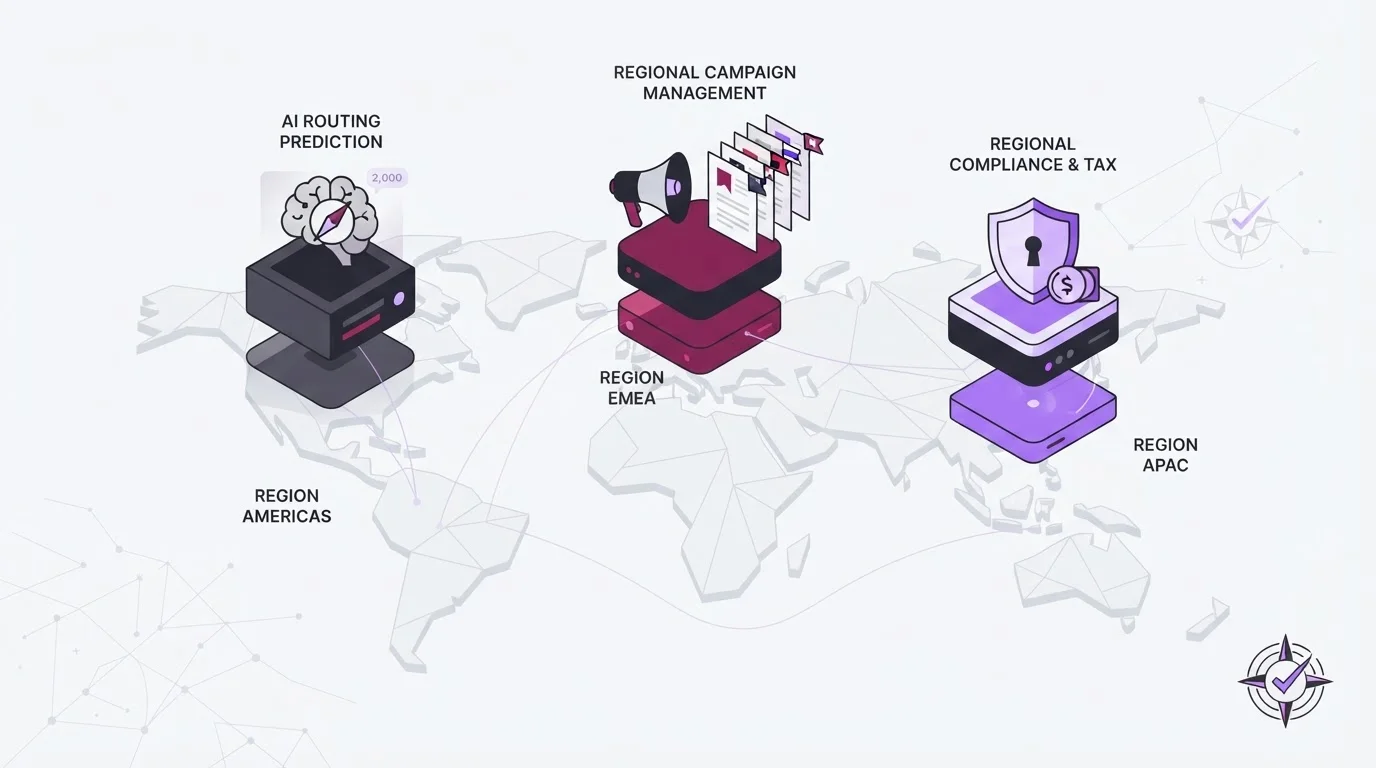
Operating globally requires more than just language translation; it demands deep localization of business logic. SFCC provides a framework for managing multiple locales, currencies, and tax rules within a single instance. For compliance, the platform assists with regional data privacy regulations such as GDPR and CCPA through its core infrastructure security.
To engage customers proactively, Salesforce enables teams to deliver AI-powered experiences that adapt to regional preferences. However, enterprises must be mindful of feature-specific limits that can impact high-volume regional campaign management. For example, certain Salesforce configurations include a limit of 5 campaigns per opportunity, which may necessitate a more advanced Marketing Cloud integration for sophisticated multi-region execution. Additionally, the platform’s ability to route customer interactions intelligently is critical, with some service tiers supporting up to 2,000 Routing Predictions user/month to optimize regional support delivery.
The Challenges of Complex Global Setups
While SFCC is a powerhouse, it introduces several friction points for enterprises with $100M+ GMV that demand agility and high-performance mobile experiences. The technical debt associated with managing custom integrations across dozens of regions can become a significant barrier to innovation.
- Implementation & Maintenance Complexity: Salesforce Commerce Cloud lets users create their ideal integration with the Marketing Cloud REST and SOAP APIs. While flexible, building and maintaining these integrations across dozens of regions requires a massive developer headcount. Implementation for complex builds often involves certified partners, adding to the total cost of ownership.
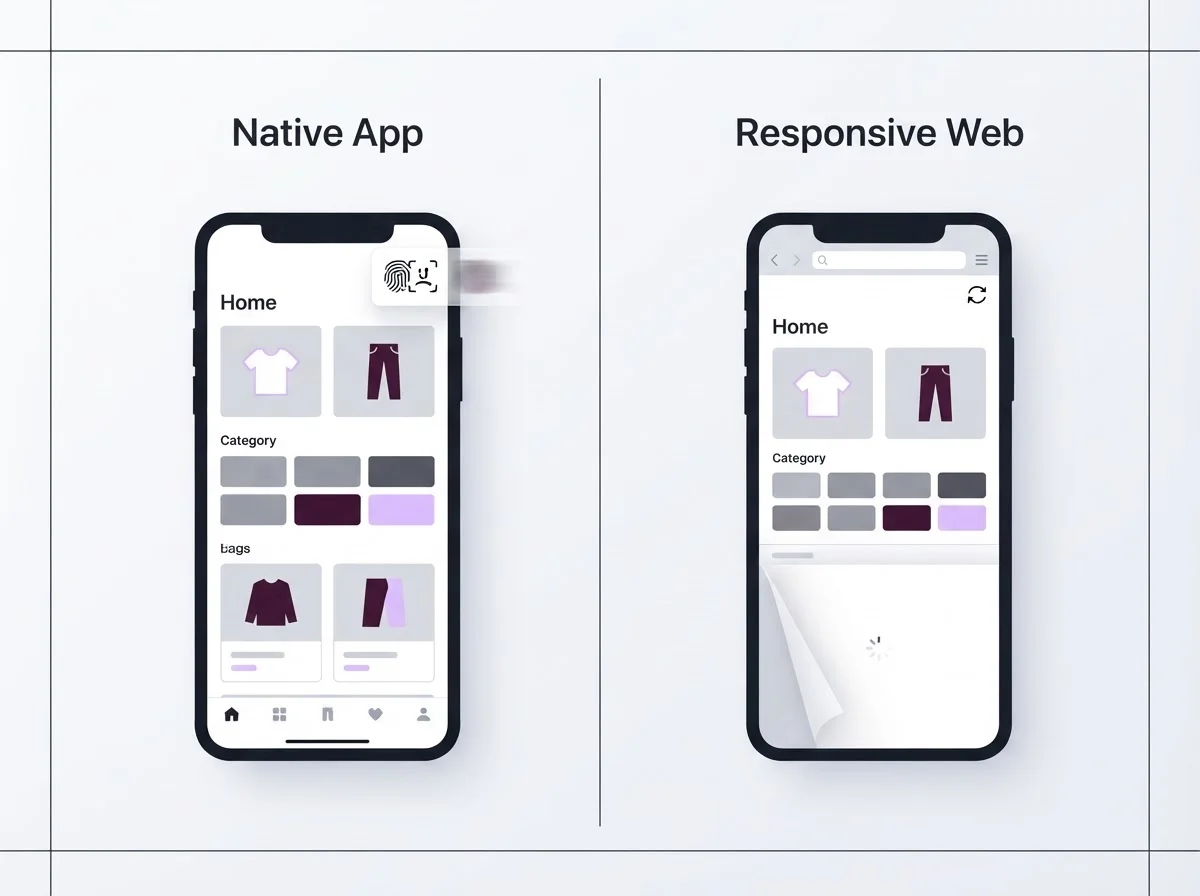
- The Mobile Gap: Many SFCC implementations rely on responsive web designs or the PWA Kit. For category-leading brands, these often feel like a responsive website wrapped in a WebView. In contrast, high-growth enterprises are increasingly demanding native iOS and Android experiences that offer better performance and higher conversion rates.
- The GMV Model: The platform’s pricing structure, typically tied to a percentage of Gross Merchandise Value (GMV), creates a variable expense that scales directly with a brand’s success. For high-growth enterprises, this can lead to escalating platform fees that outpace the operational value provided by the underlying infrastructure, making long-term budgeting less predictable.
Comparison: Salesforce Commerce Cloud vs. Supercommerce
For large enterprises, the choice often comes down to the trade-off between a broad, fragmented ecosystem and a unified, high-performance platform. Below is a comparison of how Salesforce Commerce Cloud stacks up against a unified enterprise solution like Supercommerce.
Enterprise Platform Comparison
| Feature | Salesforce Commerce Cloud | Supercommerce |
|---|---|---|
| Core Focus | General CRM-integrated commerce | $100M+ GMV Enterprise Unified Platform |
| Mobile Experience | PWA / Responsive Web | Native Mobile App (iOS & Android) |
| Pricing Model | Percentage of GMV (Revenue Share) | Fixed Enterprise Tiering |
| Multi-Brand Logic | Sites within a shared Realm | Unified Backend with Brand Isolation |
| Implementation | 3–12 months via Partners | Fast-track Enterprise Deployment |
| Infrastructure | Multi-tenant shared resources | Dedicated Infrastructure (No Noisy Neighbors) |
| Automation | Workflow automation & integrations | Native Enterprise ERP/PIM Connectors |
Supercommerce: The Unified Alternative for Global Scale
Supercommerce is built specifically for the needs of $100M+ GMV enterprises that have outgrown the rigidity of generic platforms. Unlike Salesforce, which often requires stitching together multiple clouds to achieve a complete view, Supercommerce provides a single, unified solution for high-performance web storefronts and native mobile commerce.
For multi-brand operations, Supercommerce offers dedicated infrastructure, ensuring that high-traffic events for one brand do not impact the performance of another. It removes the complexity of managing multiple Realms by providing a single source of truth for product, customer, and order data, while allowing for custom pricing rules and deep ERP integrations. By focusing on native mobile experiences rather than responsive wrappers, Supercommerce helps category-leading brands capture the majority of their revenue where customers actually live: on their phones.
Frequently Asked Questions
Q: How does Salesforce Commerce Cloud handle multi-currency operations?
SFCC allows for the creation of multiple price books and locales within a single site. It supports global currency management and can integrate with third-party tax engines for localized compliance.
Q: What is the difference between B2B and B2C editions in Salesforce?
B2C is optimized for high-volume consumer traffic and marketing personalization. B2B focuses on account-based pricing, bulk ordering, and approval workflows. Each has different site and user entitlements, such as the 3-user limit on the B2B Growth Edition.
Q: Is Salesforce Commerce Cloud headless?
Yes, it supports headless architecture via Shopper APIs (SCAPI) and Open Commerce APIs (OCAPI), though many brands find the technical debt of the legacy backend difficult to manage even in a headless setup.
Q: Why do brands move from Salesforce to Supercommerce?
Common reasons include the high cost of GMV-based pricing, the need for a truly native mobile app experience, and the desire to escape the complexity of a fragmented multi-cloud ecosystem for a more unified, high-performance solution.
Strategic Insights for Enterprise Commerce
Receive in-depth perspectives on unified platforms, scalability, and complex integrations for large-scale commerce operations.
Strategic Verdict
Salesforce Commerce Cloud remains a viable option for enterprises that are already deeply entrenched in the Salesforce CRM and Marketing ecosystem. Its ability to manage large portfolios and its suite of AI-driven personalization tools are significant assets for global retailers. However, for enterprises processing over $100M in GMV that prioritize agility, mobile performance, and TCO predictability, the limitations of SFCC’s revenue-share model and technical overhead are significant hurdles.
A unified platform like Supercommerce offers the scale, control, and dedicated infrastructure these complex businesses need to thrive without the variable tax of a legacy ecosystem. The decision should ultimately rest on whether your team wants to spend its resources managing a complex web of platform integrations or focusing on brand-specific innovation.